

1. What was the issue for which you engaged Turner, and why was it necessary? What made it complex or ‘wicked’?
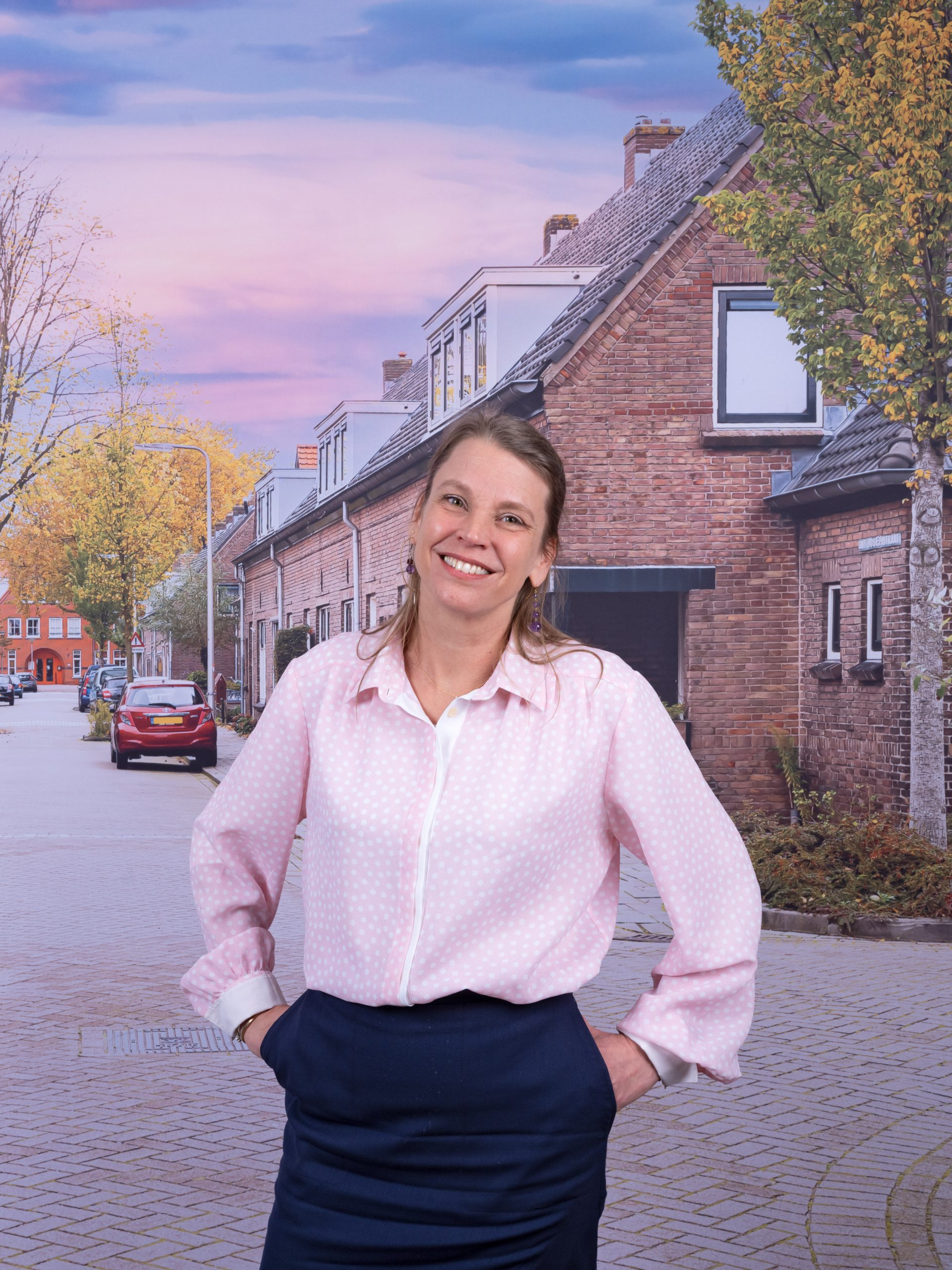
Ten years ago, housing associations in the Netherlands faced a new political reality. As a result of the new Housing Act of 2015, they were tasked with returning to their core duties: building and managing rental homes. This led to associations becoming more inward-focused, explains Anne ter Steege, who assumed the role of CEO at Mozaïek Wonen in June 2022. ‘You saw that associations could undertake fewer activities in the neighborhoods and were more internally oriented.’ In recent years, this has begun to change again, including at Mozaïek Wonen, a housing association in Gouda and surrounding areas. The previous policy plan already hinted at this: ‘Heart for Tenants’ was the motto. ‘That was the first step outward,’ says Ter Steege. Under her leadership, a new strategic plan was formulated to further this development: ‘Together we work on strong neighborhoods’ is now the motto of the housing association, which, with 125 employees, manages over 12,000 housing units in Gouda, Bodegraven, Reeuwijk, Gouderak, and Moordrecht.
Ter Steege has spent her entire career in the housing-welfare-care sector, as she puts it. ‘It’s not equally easy for everyone to participate in society,’ she explains. ‘And I enjoy working for organizations that can change that. That’s what drives me. And preferably in a way where you stand alongside people, rather than in a paternalistic manner, deciding for them what’s best.’
Within Mozaïek Wonen, she is certainly not alone in this, says Onno Zwaagstra, director at Turner. ‘The people I’ve met at Mozaïek Wonen are without exception intrinsically motivated. They want to be there for the tenants; they want to make a difference in society. That’s truly remarkable to see.’ This ambition is also embedded in Mozaïek Wonen’s new strategic plan. ‘But,’ Ter Steege explains, ‘when you work with many intrinsically motivated people, you’re sometimes inclined to linger in soft words. You keep talking about the vision, the strategy, and the ambitions. But you also need to achieve something. Otherwise, all those beautiful words remain on paper, and you don’t achieve results. After all, the intention is that people will benefit from our new strategic plan tomorrow, the day after, and fifty years from now. That’s what led us to Turner, which focuses on strategy execution.’Bab.la+3Reverso Context+3Linguee.nl+3
In Ter Steege’s view, the execution requires extra attention because the duration is six years. That’s unusual; her own appointment is initially for four years. ‘We started with the new strategic plan in 2024 and used the first year to organize the organization and prepare for execution. In 2025, we began with a new organizational structure. So, we’re actually just now starting with the implementation.’

2. What led to a breakthrough? Content-wise and in terms of change management or project management?
What Turner helped with, Ter Steege explains, is concretizing what really needed to change. ‘Onno asked really good questions. What are you going to do differently tomorrow to implement the strategic plan? He brought us back to Simon Sinek’s Golden Circle: what is your purpose? Why do you do what you do? That was truly the main trigger; then some differences in insight among people emerged. If we want to make an impact as a social organization, how do we do that? Then we realized that real estate is merely a means, not the goal.’ Zwaagstra: ‘It was really something different from what you had been doing for years.’ Ter Steege: ‘That was indeed a paradigm shift. We are here for the people. And to provide those people with a good house or a good home, we are the ones who supply the bricks. But that’s not where it ends. We want things to be good in the community where people live as well. Housing people is a means to make a societal difference.’Reverso Context
Within Mozaïek Wonen, every choice employees make is now measured against this standard. ‘We are working towards becoming a more society-oriented organization, a movement that Mozaïek had, in fact, already initiated under the previous policy plan,’ says Ter Steege. ‘But it’s evident that there are also differences. Operationally, nothing actually changes, except when colleagues encounter complex questions. What perspective do we have then? How do you deal with questions that fall outside regular activities? Then that paradigm shift is important. That’s exactly what Turner says: eighty or ninety percent of your work is running the business; the rest is changing the business.’

3. How was the execution realized?
Turner developed several products to support the execution of Mozaïek Wonen’s strategic plan, such as the introduction of portfolio management and the implementation agenda. This was combined with attention to the softer aspects, such as clear ownership and stakeholder management. “The strategy wasn’t that difficult to formulate, but how do you make the step from strategic to tactical to execution? That’s where Turner helped us,” says Ter Steege. “Look, our colleagues face a wide range of challenges in practice. If someone hasn’t paid once, you might send them a letter. But in the case of severe neglect or hoarding, it’s a situation where you’d probably visit the home in person to assess things and look for a solution. The concept of ownership, which plays an important role in the strategic plan, is relevant in that context.”
Making the right decision is no easy task for colleagues, she acknowledges. “It’s a constant balancing act. To what extent can you accommodate a tenant without creating a precedent? Moreover, we are not a social work organization—we can’t do everything for people. But by mapping out stakeholder management, we now have a much better idea of which other organizations we can involve, and when. That’s one of the elements that has helped us move from strategy to execution.”
The ongoing challenge is how to make it manageable for employees, so that they know what to do, says Zwaagstra. “That means you have to make it concrete—not just within the management team, but also for team leaders and employees. Initially, the ideas lived only in your mind, but over time they became more transparent for the rest of the organization. The staff day played an important role in that. You can’t simply explain the concept and expect everyone to understand it right away.”
Ter Steege values close contact with other social organizations active in the neighborhoods. She believes this can truly make a difference. “One time it’s with mental health services, another time with Medin, and another with a care organization. Ultimately, it comes down to the colleagues who work in the neighborhoods to implement things. They have a clear view of what’s happening in the community, and that can help us—and other organizations—genuinely improve those neighborhoods. That’s idealistic, yes. But I truly believe we can play a positive role. Not only in existing projects, but also in the new housing developments we’re realizing, by thinking about what kinds of homes you build and how. Housing associations originally arose from the idea of social uplift—ensuring that people had a decent roof over their heads and got sick less often. And in a sense, that’s still the goal, but without the paternalistic approach of the past.”
In hindsight, Ter Steege was surprised by how much still needed to happen before the plans could actually be implemented. “Of course, it started with our desire to engage more directly with the neighborhoods. But how do you do that? Then you start talking to people. But how do you go about that? How do you select those people? Then you need stakeholder management. And then you have to ask yourself what exactly you’re going to do there. What principles are you going to use? That means you need a participation vision. And that’s how it goes—step by step, you see that structure start to emerge. The same goes for the human resources vision: you really have to build that up as well.”

4. Are there benefits for all stakeholders?
Naturally, the new HR vision was of great importance to the organization’s own employees. “It already started with the internal conversations we had,” says Ter Steege. “At first, it was about making an impact. What does that mean—for you—in your role? Those conversations essentially provided the legitimacy for the choices we made. On top of that, we also went through a merger during that time. That took up a lot of time for colleagues but also yielded extra funds, half of which we wanted to dedicate to our tenants. That in turn sparked some interesting discussions. Why would we do that? What should we spend it on? At that point, we formulated a number of criteria that the projects would have to meet. The way this landed within our organization was really the result of our ambition to become more active in the neighborhoods.”
For tenants, the benefits are clear: in the coming years, they are expected to benefit from the organization’s aim to contribute to the development of stronger neighborhoods. Ter Steege: “Mozaïek needs to become even more visible and accessible so that people feel invited to reach out with their questions. That’s something we’re truly working on. In the past, when a project was completed, the alderman and I would give a short speech. Now we organize a celebratory event, where not only the new residents are invited, but also their neighbors. And we don’t just give a speech—we introduce our team, so everyone knows who to approach in the future. I think that’s a meaningful intervention, which will ultimately contribute to greater social cohesion.”

5. What was the most important dilemma, and how was it addressed?
The most important dilemma for Ter Steege was setting priorities. “If you want to execute the strategy, it’s essential to realize that you can’t do everything at once. That is my biggest challenge. I want to do everything today, and have it all changed by tomorrow. But I also work with an organization that needs to make time for this—and I need colleagues who have time. As I mentioned earlier: ninety percent is ‘running the business’, which means my colleagues have ten percent of their time to devote to these projects. I have all the time in the world—this is my primary task. So how do I deal with that? That’s a huge dilemma. The solution lay in portfolio management: making it clear what exactly needed to be done. I have to admit, I looked at that with some unease. Ideally, I’d like to be someone who can both inspire and slow things down—but the latter is a challenge. This is just who I am. Turner gave us tools for effective portfolio management. In the end, we simply had to postpone certain things.”
Mozaïek has now hired a dedicated project management officer—someone who helps organize activities and set priorities. “If you try to do too much at once, you’ll end up achieving nothing,” says Zwaagstra. “It’s also about assigning ownership, finishing things, and taking concrete steps.” Ter Steege adds: “And ownership is quite a challenge in a socially driven organization. Because of everyone’s involvement, you sometimes have five people working on the same thing. So it’s important to manage that well. In those cases, a project charter can be a helpful instrument.”
With a clear strategic direction, focused portfolio management, and a commitment to execution, Mozaïek Wonen is making the shift from strategy to practice. The strategic plan is not just a guide—it’s a working method that steers day-to-day decisions. By consistently following this path, Mozaïek Wonen continues to build strong neighborhoods where residents truly feel at home.

Would you like to improve, innovate, and transform faster?


Klimmendaal
At the initiative of Verstegen Accountants in Dordrecht, Edwin Schippers of Turner conducted an organizational assessment of Klimmendaal, a rehabilitation center headquartered in Arnhem. The organization was facing several challenges:

Sustainable Improvement in Academic Success
High dropout rates and low completion rates. Utrecht University of Applied Sciences therefore sought to improve academic success in a comprehensive and systematic manner.

Aegon
Business Property Damage Transition Aegon Netherlands Clear Vision Driven by core values New criteria as the deciding factor From Vision to Execution Insurer Aegon has

NHL and Stenden
Collaboration Model and Transition Path for a Merger NHL and Stenden Shared Ambitions and Opportunities Coordination of the Entire Program Higher-quality education and research NHL

HAS University of Applied Sciences
Accelerated Implementation of the Educational Vision Flexible and Adaptive Education Made a Reality A Concrete Vision for Educational Reform Insights into the Progress of Educational Reform Self-Assessment for Faculty and

Noorderpoort
Digital Innovation in the Classroom ROC Noorderpoort Experimentation in Education Innovation in Attendance Tracking Saving Class Time Digital Innovation is high on the agendas of

Breakthrough in Primary Care
Spreekuur.nl is a great example of how digital healthcare makes it possible to provide the Right Care in the Right Place. With this triage and diagnosis app, patients can take

Digidok
Breakthrough in Primary Care DigiDok Results Treat 32% more patients per hour A virtual consultation can be 36–50% shorter than an in-person consultation 80% of

The Hague University of Applied Sciences
Faster assistance for students Clear responsibilities for teaching and education support staff A practical improvement plan for a critical process: testing and examinations. Accelerating progress on challenging issues: fraud detection

College of Woodworking and Furniture Design
Improved ordering process for students and faculty Smarter procurement of materials More even workload for “stores” (fewer peak periods) More efficient administration and better control over finances Foundation for continuous

Noorderpoort
A new direction for Noorderpoort that aligns with society in 2035. Strategy Execution: immediately testing the strategy in practice through experiments. Close alignment with the needs of students and the

Netherlands Food and Consumer Product Safety Authority
Innovation in Oversight and Enforcement Netherlands Food and Consumer Product Safety Authority (NVWA) Breaking Down Large-Scale and Complex Implementations Establishing an Implementation and Innovation Engine