
Key Takeaways - PrepAIr for the Future: AI Readiness in the Financial Services Industry
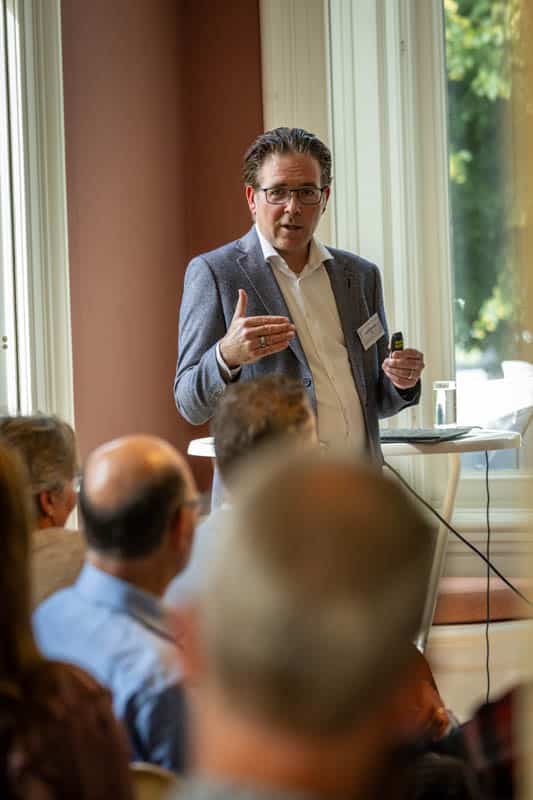
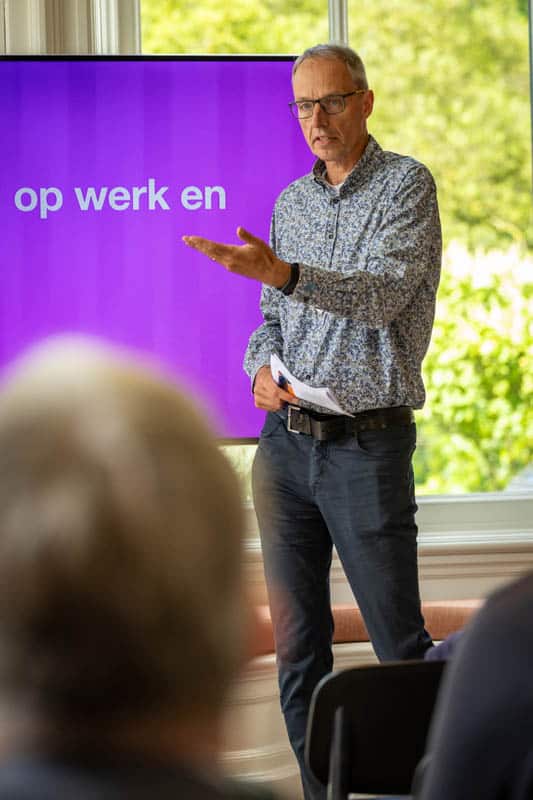
Turner aims to nurture its relationships by providing timely, fresh, and relevant insights into its markets and the strategy execution and innovation challenges they face. On Wednesday, July 3, Turner hosted the first edition of “PrepAIr for the Future” at Landgoed de Boom. Participants from the financial services sector and 10 experts in the field of AI worked together to explore the future of AI in financial services.
Key points:
- AI affects not only the internal organization but also the external environment through the ways in which competitors, suppliers, and customers use AI.
- Everyone wants to do “something” with AI. But deciding what to do requires clear leadership and decisions regarding the allocation of resources and budget.
- In the coming period, the focus will shift to linking AI solutions to direct business results in order to demonstrate the ROI
- Now focus on what is already possible within the current organization and where breakthroughs are needed. Think big, get started quickly!
Ethics in AI – Liesbeth Hazebroek, Ethics Matter; Joris Krijger, De Volksbank; Alex Corra, SVB
During the inspiration session on ethics in AI, we explored how organizations can address the ethical challenges posed by rapidly evolving AI technology. A key topic was measuring and improving the ethical maturity of organizations. Using an ethical maturity model helps evaluate governance, management engagement, and ethical assessments in AI systems. Ethical considerations must be structurally embedded in organizations, with ongoing attention during the design and development phases of AI applications. A robust ethical infrastructure ensures that ethical issues are discussed regularly and systematically. Real-world examples demonstrated that the successful application of ethical models helps identify and resolve issues, such as bias in datasets. The ethical standards of external suppliers must be evaluated and integrated to ensure supply chain accountability. New ethical issues, such as the explainability and accountability of autonomous systems, require broad societal and moral discussions. It is crucial to make not only technological but also organizational and societal preparations.
Make Your Organization Quantum-Secure – Maarten Wijdekop, Quantum Gateway Foundation
Superposition and interference are the core principles of quantum computing, in which qubits can be both 0 and 1 at the same time. This enables parallel computations and greatly accelerates computational processes. Entanglement ensures that qubits reinforce each other, even over long distances, enabling revolutionary communication techniques. Quantum computing offers enormous opportunities for the financial sector. It can compute complex financial models at lightning speed, improve the simulation of market scenarios, and find optimal routes in vast networks. Banks and insurers can benefit from faster risk assessments and more accurate predictions. However, this technology also presents cybersecurity challenges. The computational power of quantum computers can break current encryption methods, threatening the security of customer data. It is crucial for financial institutions to invest now in post-quantum cryptography to protect their data. The integration of quantum computing requires careful planning and specialized knowledge. Financial service providers must evaluate and upgrade their security protocols to be prepared for this technological revolution. Quantum computing promises to transform the financial sector, bringing opportunities for innovation and the need for robust data security.
Ecosystems for Innovation – Femmie Geradts, Startup Village Amsterdam
Strong ecosystems are crucial for innovation and the growth of businesses and technologies. Cities such as Amsterdam, Berlin, and Paris attract talent, foster collaboration, and stimulate Innovation. However, the Netherlands faces challenges such as changes to the growth fund, a decline in the number of international students, and revised tax incentives, all of which could weaken its capacity for Innovation.
Cross-sector collaboration is essential. In Amsterdam, knowledge institutions collaborate in innovation parks such as the Science Park, where technical and commercial skills come together to create successful startups. Support structures such as incubators and accelerators offer startups not only funding but also guidance in validating ideas and developing commercial potential. Programs such as Startup Village provide the necessary infrastructure and networking support. Funding is crucial to the success of startups and innovation projects. A diversity of funds—ranging from small validation funds to larger investments for scale-ups—is necessary. Policy must focus on streamlining permitting processes and attracting high-caliber talent to ensure a sustainable innovation ecosystem. Collaboration, adequate funding, and supportive policy measures are essential to creating a fertile environment for startups and innovative projects. It is essential to take the right steps now to strengthen the Dutch ecosystem and prepare it for future challenges.
The Impact of AI on Work and Employees – Han Gerrits, Vrije Universiteit Amsterdam
AI technologies are transforming the workplace and having a profound impact on employees. During our inspiration session, we discussed how AI has evolved from symbolic AI in the 1980s to today’s powerful machine learning models. Thanks to improved hardware and the rise of the internet, these models can now understand natural language and interpret complex images. Technological innovations such as Large Language Models (LLMs) and Fusion Models are further expanding the potential applications of AI. LLMs not only generate text but can also follow instructions, while Fusion Models combine different data types to create new content, such as AI-generated advertisements. Practical applications of AI are numerous: in healthcare, for example, AI can detect breast cancer at an early stage, while in the financial sector, AI is used for automated data analysis and creditworthiness predictions. Banks are experimenting with personalized marketing generated by AI. The session also highlighted ethical and social considerations, such as the need for regulations to protect privacy and prevent misuse. AI does not necessarily replace jobs but transforms tasks, allowing employees to focus on more complex and creative work.
AI agents and autonomous systems promise even greater efficiency and precision, while collaboration between humans and AI remains central. Organizations must now evaluate and adapt their processes to be ready for the AI revolution and reap its benefits.
Supervision of AI in the Financial Sector – Damian Borstel, AFM
The rapid rise of AI in the financial sector offers unprecedented opportunities, but also presents significant challenges. During our recent inspiration session, it became clear how crucial effective oversight and regulation are for integrating this technology effectively and safely. In a world where AI is finding more and more applications—from investment research to fraud detection—it is essential that companies not only reap the benefits but also manage the risks responsibly. AI can analyze financial data, manage policy documents, and even conduct penetration tests to detect security vulnerabilities. But with this power come responsibilities. The session emphasized the need for international cooperation and regulation. Initiatives by organizations such as the G20 and the United Nations are establishing guidelines for the ethical and safe use of AI. Within the EU, the AI Regulation plays a central role in harmonizing rules across national borders. This ensures that AI applications are not only effective but also fair and transparent. One of the biggest challenges is avoiding bias in data and algorithms. Studies, such as those from Stanford, have shown that even well-intentioned AI systems can produce biased results. That is why continuous evaluation and adjustment of AI systems are necessary. Companies must now take the step to explore and integrate AI. By experimenting internally and collaborating with regulatory agencies, they can prepare for a future in which AI plays an increasingly significant role. It is a time of innovation and opportunity, where proactive action and ethical awareness are the keys to success.
Keynote: Large Language Models – Douwe Kiela, Stanford University
Douwe Kiela, CEO and founder of Contextual AI, gave us a glimpse into the world of advanced language models and their applications in the business world. Contextual AI helps companies operate more efficiently by processing data securely and at scale, which is particularly useful for investment research, wealth management, and document management.
Kiela’s journey began with studies in cognitive artificial intelligence and philosophy, after which he switched to computer science and natural language processing. He became involved early on in groundbreaking deep learning projects such as Word2Vec and AlexNet, and later worked at Facebook AI Research under the leadership of Yann LeCun. There, he played a role in the development of AI technologies such as retrieval-augmented generation, which significantly improve the quality of language models in enterprise environments.
There are numerous practical applications for this technology. AI can analyze financial data and support investment decisions, process internal data to help companies operate more efficiently, and manage policy documents while detecting fraud or inconsistencies. Kiela emphasized that companies should experiment with AI to better understand and integrate the technology, but should do so internally at first to minimize risks. Maintaining control over AI models and optimizing them for specific business needs is essential.
This year is all about production use cases, with a focus on the actual implementation of AI in business processes. Next year, the emphasis will be on linking AI solutions to direct business results to demonstrate the return on investment (ROI). During the Q&A session, Kiela discussed the adoption of AI in various regions and sectors and emphasized the importance of striking a balance between innovation and security. He called on companies to be proactive in implementing AI and to take ethical considerations into account.
Kiela concluded his keynote with a powerful call to action for companies to start experimenting with AI now. By adopting the right strategies and forming the right partnerships, they can prepare for a future in which technological progress and ethical considerations go hand in hand.
The Major Turner AI Implementation Study
Turner is conducting a large-scale study on the factors contributing to the success and Failure Factors of AI implementation in the financial services sector. Would you like to gain more insight into the factors that contribute to the success and challenges of AI implementation in your organization? Fill out the form, and we’ll contact you with no obligation!
Want to learn more about Turner Financial services?
Would you like to learn more about what Turner Strategy Execution can do for your organization? Fill out the form, and we'll get back to you as soon as possible.
"*" indicates required fields









Would you like to improve, innovate, and transform faster?
Turner is specialized in strategy execution. We make it our business to turn an organisations strategy into reality. For the seventh consecutive year, Turner has been recognized by clients as the best strategic consulting firm in the Netherlands. More than 4,000 executives and professionals participated in the MT1000 survey, in which Turner received the highest ratings for strategic consulting, client focus, excellent execution, and product leadership.

Read more about the results other clients achieved with the support of Turner Strategy = Execution. Ready to talk? Schedule an appointment. Contact us.
Contact
We would like to get to know you.
Do not hesitate to contact us if you have any questions!
Huize de Boom
Arnhemseweg 107
3832 GK Leusden
Phone: +31 (0)33 – 285 93 00
Email: info@turner.nl
Make an appointment
Would you like more information or a tailor-made quote? Fill in the form for a no-obligation appointment.