
Teams Can Better Leverage the Strengths of Introverts
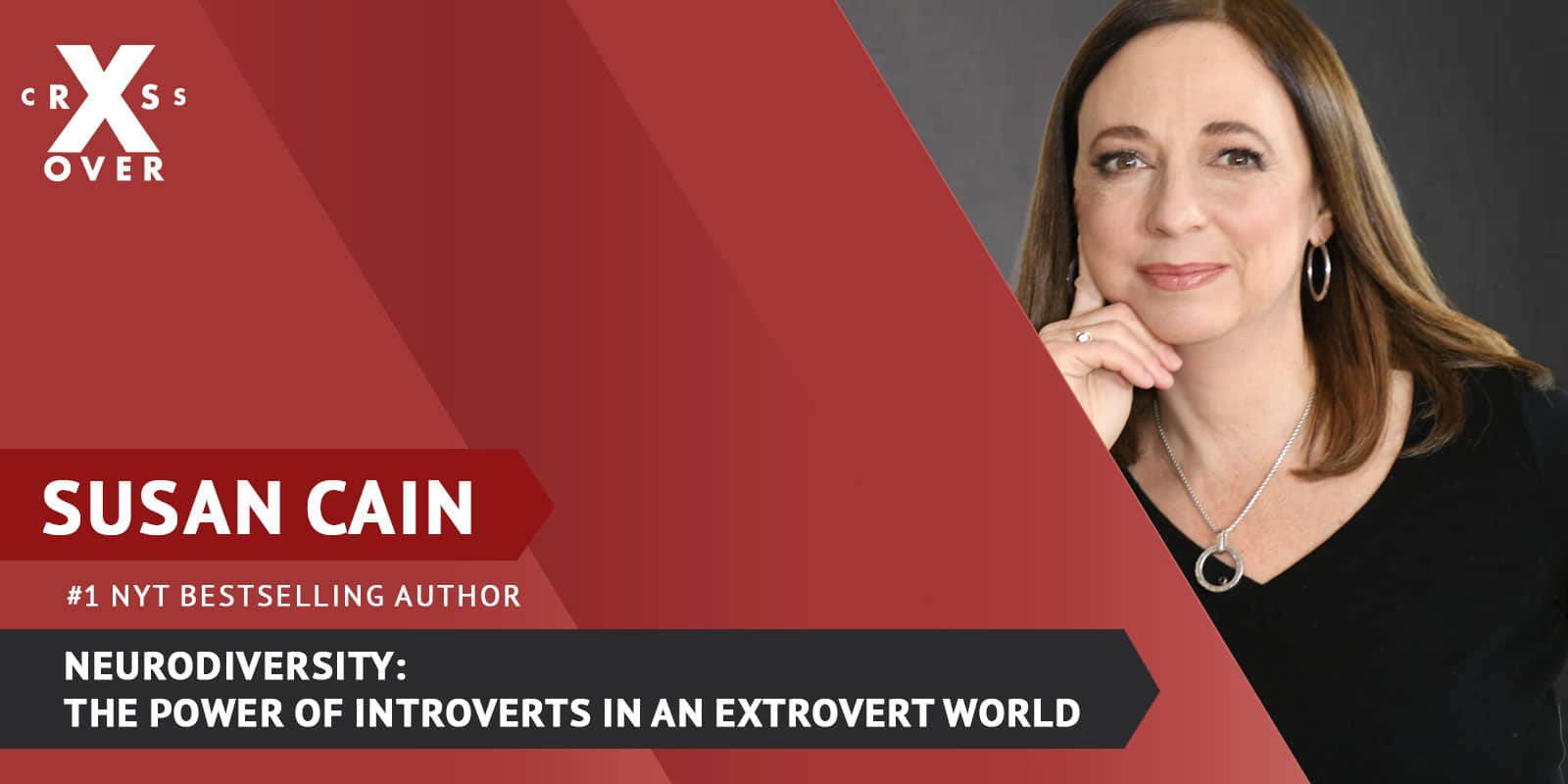
In its X-Over series, Turner organized a session on neurodiversity, focusing on the power of introversion in an extroverted world. Under the moderation of Annelieke van Schie, American bestselling author Susan Cain (Harvard, Princeton) engaged in a discussion with Nathalie van Berkel, member of the Board of Directors at UWV, and Jeroen Geurts, Rector Magnificus of VU. The unanimous conclusion: we need to do more to allow introverts to thrive. Their contributions are far more valuable than often realized.
- Introversion and extroversion are expressions of neurodiversity: they reveal how people recharge.
- Introverts are not anti-social: they simply respond differently to stimuli.
- Introverts can excel as leaders, sometimes even outperforming extroverts.
- Teams can better align roles based on individual types.
- There are various methods and tricks to help introverts function better.
- Mixed teams are high-performing teams and enjoy their collaboration.
For its clients, Turner organizes an exclusive X-Over series where leading speakers (scientists, thought leaders, top executives) share the latest insights from their fields. Strategy execution is a multidisciplinary field, increasingly about combining various disciplines and perspectives. Speakers like George Kohlrieser and Frederik Anseel have previously featured in the X-Over series.
On Friday, June 14, NYT bestselling author Susan Cain, known for her book ‘Quiet: The Power of Introverts in a World That Can’t Stop Talking’, joined a virtual fireside session on neurodiversity and introversion in an extroverted world. Alongside Cain, Turner invited two executives for this conversation: Nathalie van Berkel, a member of the Board of Directors at UWV and an introvert herself, and Jeroen Geurts, Rector Magnificus of VU. They engaged in a discussion with Annelieke van Schie, a consultant at Turner.
The subtitle of Cain’s book hints at the issue: the world is addicted to talking. Introverts often get drowned out, and their qualities remain underutilized, which Cain finds regrettable. ‘Psychologists sometimes call introversion and extroversion the north and south of human temperament. They determine much of what we do, how we interact, love, make decisions, and create. They also affect how we function at work.’
Cain views introversion and extroversion as expressions of neurodiversity, revealing how people recharge. Introverts recharge best when alone, while extroverts need activity. An extrovert thrives at a busy party with friends, while an introvert will be exhausted after a few hours—not because they aren’t enjoying themselves, but because their energy depletes. ‘Introverts’ neural systems react more quickly to stimuli, so they need rest to regain balance.’
Cain identifies two major misconceptions about introversion and extroversion in the workplace. First, that introverts are anti-social. ‘This is false. Introverts and extroverts appreciate company equally but experience it differently. An introvert might prefer having coffee with one colleague or engaging in a deep conversation, facing fewer stimuli than at a large party.’ The second misconception is that introverts make poor leaders. ‘Data shows that fewer introverts hold leadership roles, but this is due to the misconception. Introverts perform very well as leaders, sometimes better than extroverts. This misconception has significant effects, rooted in societal changes that favored charisma and extroversion. However, technology has highlighted the value introverts bring, shifting perceptions to recognize their strengths.’
Role Distribution
Jeroen Geurts, Rector Magnificus of VU, appreciates Cain’s advocacy for introverts. ‘We still underutilize the unique qualities of both extroverts and introverts,’ he says. ‘We often talk about team members or individual scientists without recognizing their specific strengths. We should. Consider what it means for a team if we acknowledge that one member is a better educator while another is a better analyst. Or if one is more creative and another more technical. These qualities can each play a role within a team. However, thinking about teams and teamwork is relatively new in academia. Scientists collaborate globally in multidisciplinary networks based on their expertise and knowledge. The idea of collaborating based on neurodiversity is still developing.’
Nathalie van Berkel from UWV resonates with Cain’s description. ‘People often think I’m extroverted, but they don’t see how exhausted I am at the end of the day. After a tough meeting or a presentation, I need time to internalize and reflect. I believe this gives me an advantage over extroversion. We’re accustomed to taking time to reflect, giving us a broader perspective.’
Van Berkel supports Geurts’ approach to creating a neurodiversity panel for role distribution. ‘We’re talking about a spectrum—no one is fully extrovert or introvert. We can discuss preferences and encourage self-reflection. At UWV, we’re undergoing an agile transformation and already consider different leadership qualities when forming teams.’
‘Declare Yourself’:
Susan Cain is pleased that the stigma around introversion is fading. She cites Douglas A. Conant, former CEO of Campbell’s Soup, who invited new colleagues to introduce themselves via a short PowerPoint presentation. ‘Declare yourself,’ he called it. ‘He shared his ideas about the industry, the company, teamwork, and himself as an introvert. It was highly appreciated and effective. People knew what to expect from him. This practice could benefit teams as well: discuss what energizes you, what you need to recharge, and how you want to work. It’s a simple, straightforward part of us.’
Conant also wrote thank-you letters to employees who made significant contributions. ‘He wrote about 30,000 letters during his career. It was his introverted way of expressing appreciation.’
Van Berkel agrees with Geurts on accommodating different temperaments in teams. ‘You can adjust meeting structures to ensure introverts can share their ideas. Embedding reflective moments works well, allowing collective contemplation on what’s been said and what hasn’t. Introverts often need more time to think before responding. You can use techniques like asking participants to write down their thoughts before or during the meeting to gather pure ideas without influence from hierarchy or seniority.’
Another way to support introverts, Cain suggests, is by providing separate, quiet workspaces. ‘Years ago, a study known as the Coding War Games examined software developers’ performance. The best performers came from companies with private, quiet spaces, essential for focus, particularly for introverts.’
Human Capital:
At UWV, Nathalie van Berkel also opposes the habit of filling days with back-to-back meetings. ‘We seem to think we’re productive with full schedules, but it’s counterproductive. I’m most effective when I have time to reflect. This energizes me to make the best decisions. I’m trying to establish this practice within our organization.’
As Rector Magnificus, Jeroen Geurts strives to keep neurodiversity on the agenda at VU. ‘Universities are relatively conservative. There’s much bias in our expectations. Leaders are expected to be strong. I aim to change that by asking if people feel comfortable and how we can improve. With Susan and Nathalie, I believe we can better utilize introverts. But I’m still exploring how to achieve this. I plan to delve into Susan’s work for guidance.’
Cain recommends literature, like Jim Collins’ *Good to Great*, which identifies key traits of successful companies’ CEOs: clear vision and introversion. ‘These leaders are not loud but focused and dedicated to their mission. Their introverted nature helps them invest deeply in their goals, benefiting the organization.’
How Leaders and Professionals View Neurodiversity:
Participants in this X-Over selected their top three statements from nine. The top three were:
- A better balance between introverted and extroverted leaders and employees leads to improved leadership, results, and talent retention, including workspace and remote work arrangements.
- There is no correlation between good speakers and idea generators. Ideas are best articulated by confident speakers.
- Solitude is crucial! Individual contemplation and idea formation are as important as group ideation.
The results highlight the need for organizations to recognize the diverse personalities within teams and the unique contributions of both introverts and extroverts. Want to know more about the survey among leaders and professionals? Read the article.
Susan Cain on balancing meeting interactions between extroverts and introverts:
“A study by the Kellogg School of Management found that in a typical six- to eight-person meeting, three people do 70% of the talking.” Tips from Susan Cain for better balance:
- Studies show that everyone—extroverts and introverts—produces more and better ideas alone than in a group. Ask everyone to prepare thoughtfully before the meeting.
- Go around the room and ask for thoughts in turn to prevent dominance.
- Pause the meeting periodically for reflection and note-taking, then resume the discussion.
Susan Cain on group work:
“Group work is beneficial to some extent. However, we’ve become too reliant on it, believing creativity solely emerges from group processes. We’ve forgotten the crucial role of solitude. Studies show that in groups, people mimic others’ opinions unknowingly. I suggest a hybrid process: brainstorm individually first, then share ideas collectively. This preserves the solitary aspect necessary for creativity.”
Susan Cain on introverts’ contributions in teams:
“Creative individuals often have deep introverted streaks due to the importance of solitude for creativity. Introverts’ persistence and concentration are beneficial for solving complex problems. They analyze more before diving in compared to extroverts.”
Turner organizes a series of exclusive X-Over events for its clients. Leading speakers share the latest insights in psychology, ethics, behavioral science, theology, leadership, and AI, aiming to inspire and broaden horizons, as strategy execution is multidisciplinary. Leaders and professionals need to combine knowledge and approaches from various fields. Want to know more about the Turner X-Over series? Check this page.
Strategy = Execution. Improve, renew and innovate faster
How can organizations make strategy execution their top priority and improve, innovate faster? Find out in *Strategy = Execution*. Based on Turner’s research into success factors of strategy execution & innovation, this publication includes interviews with 60 executives, analysis of over 75 cases, 300 relevant books and articles.
- American Management Book of the Year 2021, No. 1 in Strategic Management, bestseller top 100, seventh edition, translated into: English, German, Spanish, Russian, and Bahasa.
- Selected as a top management book by innovative organization CEOs (FD new champions). Included in the library of classics (MB.nl).
- Nominated for Management Book of the Year.
- Featured in numerous articles and interviews in FD, Emerce, Frankwatching, and CFO.
- 24 recommendations from top executives.
- Numerous TED Talks and in-company workshops at top 25-50 organizations, average rating 8.7.

- American Management Book of the Year 2021, No. 1 in Strategic Management, bestseller top 100, seventh edition, translated into: English, German, Spanish, Russian, and Bahasa.
- Selected as a top management book by innovative organization CEOs (FD new champions). Included in the library of classics (MB.nl).
- Nominated for Management Book of the Year.
- Featured in numerous articles and interviews in FD, Emerce, Frankwatching, and CFO.
- 24 recommendations from top executives.
- Numerous TED Talks and in-company workshops at top 25-50 organizations, average rating 8.7.

A form has never been the best way to understand someone. AI enables multimodal input.
From minimal input to rich context: AI-driven multimodal input is transforming how financial institutions make decisions.

Klimmendaal
At the initiative of Verstegen Accountants in Dordrecht, Edwin Schippers of Turner conducted an organizational assessment of Klimmendaal, a rehabilitation center headquartered in Arnhem. The organization was facing several challenges:

Sustainable Improvement in Academic Success
High dropout rates and low completion rates. Utrecht University of Applied Sciences therefore sought to improve academic success in a comprehensive and systematic manner.

Aegon
Business Property Damage Transition Aegon Netherlands Clear Vision Driven by core values New criteria as the deciding factor From Vision to Execution Insurer Aegon has

Smarthealth.nl | From Digital Strategy to Execution: “Above all, work incredibly hard”
Strategy = Execution SmartHealth.nl | From Digital Strategy to Execution: “Above All, Work Really Hard” SmartHealth.nl writes about the eHealth Strategy Masterclass. This Masterclass is

Key Processes have a leverage effect on objectives
Strategy = Execution Key Processes have a leverage effect on objectives In this blog, Jacques Pijl of Turner discusses the key role of processes in

NRC | Vacation Activity Book for Managers
Strategy = Execution NRC | Vacation Activity Book for Managers On July 8, 2017, Ben Tiggelaar wrote a column in the NRC about Jacques Pijl’s

Emerce | Accelerating and Innovating: Guidelines for Strategy Execution
Strategy = Execution Emerce | Accelerating and Innovating: Tips for Strategy Execution In the article “Accelerate and Innovate: Tools for Strategy Execution,” Emerce discusses Jacques
Professor George Kohlrieser Live on High-Performance Leadership
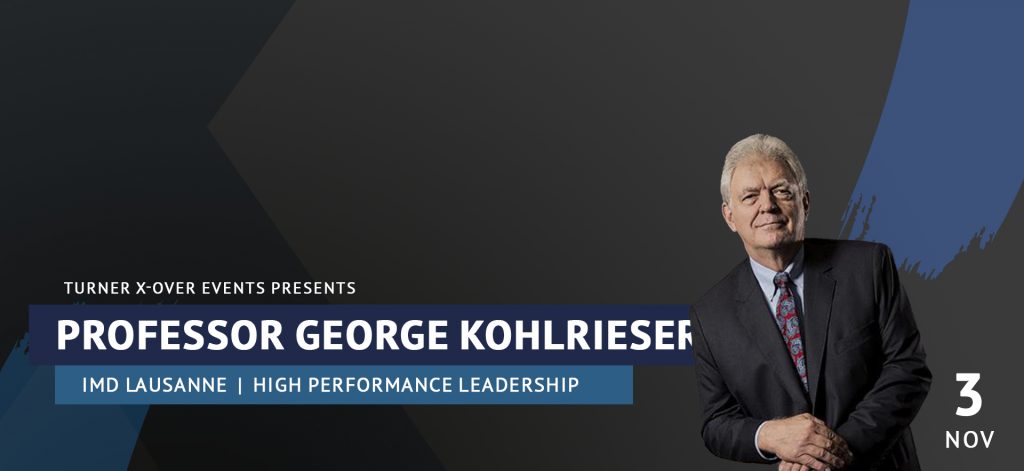
Professor George Kohlrieser (IMD Lausanne) will present the LIVE seminar, “High Performance Leadership,” exclusively for a select group of Turner associates.

Professor George Kohlrieser Live on High-Performance Leadership
Professor George Kohlrieser (IMD Lausanne) delivered the LIVE seminar, “High Performance Leadership,” exclusively for a select group of Turner associates.

Turner X-Over on Neurodiversity: The Power of Introverts in an Extrovert World
For its clients, Turner organizes an exclusive X-Over series where leading speakers (scientists, thought leaders, top executives) share the latest insights from their fields. Strategy execution is a multidisciplinary field,

Neurodiversity: The Power of Introverts in an Extrovert World
In its X-Over series, Turner organized a session on neurodiversity, focusing on the power of introversion in an extroverted world. Under the moderation of Annelieke van Schie, American bestselling author
Contact
We would like to get to know you.
Do not hesitate to contact us if you have any questions!
Huize de Boom
Arnhemseweg 107
3832 GK Leusden
Phone: +31 (0)33 – 285 93 00
Email: info@turner.nl
Make an appointment
Would you like more information or a tailor-made quote? Fill in the form for a no-obligation appointment.
