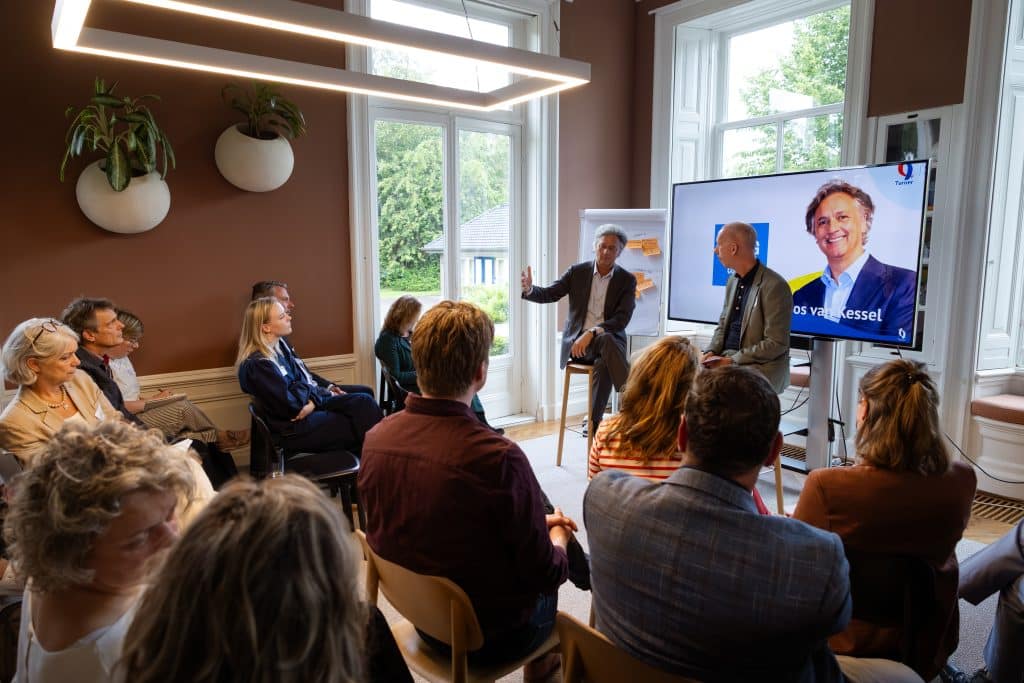
“LLO means much more than just jumping on the bandwagon of flexible Education”

LLO and increased flexibility are often mentioned in the same breath, but it is essential to distinguish between these two concepts. They have different objectives and requirements and cannot simply be combined into a single approach.

Turner provides its clients with timely, fresh, and relevant insights into their markets and the Strategy Execution challenges they face. In this blog, Katinka Cornelese and Dymphi van der Hoeven, Strategy Execution experts in the Education sector at Turner, explain the implications of LLO and increased flexibility for Innovation and Strategy Execution.

Flexibilization in Higher Professional Education: External Drivers

Developing educational programs within the framework of Lifelong Learning (LLO) often goes hand in hand with making existing programs more flexible. It is important to clearly distinguish between these two concepts, as educational consultants Katinka Cornelese and Dymphi van der Hoeven of Turner have learned from their practical experience. “When you combine the structure of LLO, increased flexibility, and new insights into teaching methods, you’re talking about a complete transformation of Education.”

We’ve said it before: Lifelong Learning (LLL) is relevant for vocational schools, colleges, and universities alike. The government encourages people to continue developing their skills; the number of traditional students is declining significantly in many regions; and trends such as labor market shortages, the energy transition, and rapid technological advancements call for serious training, retraining, and continuing education. These developments are leading educational institutions to offer more flexible programs, often specifically tailored to certain target groups, says education consultant Katinka Cornelese. “Educational institutions want to make it more appealing for professionals to return to school and continue their learning. But that’s usually not possible during regular working hours. As a result, educational institutions are offering customized programs to meet the needs of individual professionals. About ten years ago, a major subsidy program was set up for this purpose. The flexibility required for this turned out to be very appealing to regular students as well. After all, many of them now hold down a job on the side. In addition, this flexibility aligns with the development of modern teaching methods. Students are given more control over their own education. This has created a kind of flywheel effect of flexibility, which can also strengthen post-initial training programs.’

But that’s not as easy as it sounds, as Katinka and her Turner colleague Dymphi van der Hoeven have discovered. “At an ROC where I’m currently working on a project, I’ve noticed that there’s sometimes confusion about LLO versus increased flexibility,” says Dymphi. “The management team at this ROC uses a broad definition of LLO: they say LLO encompasses all education for everyone from 0 to 100 years old. It’s a nice definition, because LLO literally means lifelong learning. But in practice, this definition is so broad that it’s quite difficult to translate into a sound, implementable strategy. Ultimately, however, we succeeded by focusing on specific target groups and sectors within this broad definition. Everyone in the Netherlands receives education starting at age four until they enter their first paid job. In practice, all the educational programs we pursue after that fall under the umbrella of LLO: “post-initial education.” Katinka: “Although that definition isn’t set in stone either; LLO is primarily about mindset and attitude: we want to teach people to keep learning. That’s a very important aspect.”

Can LLO benefit from increased flexibility?

Dymphi has experienced firsthand the confusion surrounding greater flexibility and LLO. A vocational school facing a shrinking student population wanted to increase its appeal by adopting a more flexible, modular curriculum. The school’s board wanted to use the introduction of the new, more flexible structure as an opportunity to incorporate LLO offerings. Education divided into modules—blocks that can be exchanged between different programs? Why not, you might say. “It’s a logical idea,” says Dymphi. “But people enrolled in post-initial education are working during the day or have caregiving responsibilities, so they often can’t attend classes at regular times. Moreover, they generally already have prior experience. They need a tailored program. That calls for a flexible approach and cannot simply be fitted into the regular Education system.”

This could create a virtuous cycle. Instructors who develop flexible educational modules for regular students could also develop modules for LLO. However, LLO often involves much shorter cycles in the demand-driven development of education programs than regular education does. LLO modules (or courses, training programs) are developed in response to urgent demand from organizations or companies and are therefore less generic. As a result, LLO education takes a more commercial approach. “Of course, mainstream education is also increasingly focused on demand,” says Katinka. “Education today is more closely aligned with the professional field. There is more attention paid to authentic real-world issues. Didactic considerations also play a role here. Among vocational and higher vocational education instructors, there is a belief that students who work more closely with real-world practice often learn better and are better prepared for professional practice.”

Taking a Break from LLO

Katinka’s advice in such cases: set aside the combined development of flexibility and LLO for a moment, and focus on your educational vision. “Of course, it’s easier to develop LLO modules if you have experience with modularization. But in some situations, the focus must first be on traditional education and retaining the existing student population. Dropout rates are socially undesirable and costly. There are educational institutions where LLO has long been part of the curriculum and where the different types of education already coexist. Schools where that is not the case would be better off focusing first on making the curriculum more flexible itself, before they start overhauling all their systems. Making choices and being clear—that’s what it’s all about.”

After all, making work more flexible is complicated enough. When we ask ChatGPT what types of flexible work arrangements there are, it comes up with—unsurprisingly (since ChatGPT is, of course, a language model)—a top 10 list that perfectly illustrates the confusion we’re dealing with.

Flexibilization According to ChatGPT

  1. Modularization
  2. Blended learning
  3. Self-Directed Learning
  4. Flexible Degree and Certification Programs
  5. Competency-Based Education
  6. Customizable Learning Paths
  7. Open Educational Resources
  8. On-the-job learning
  9. Asynchronous Learning
  10. Learning at Your Own Pace/EVC Learning

“That’s exactly what’s happening, and these are incomparable concepts,” says Katinka. Dymphi: “The list is completely accurate, and many forms of flexibility are interconnected. That’s the confusion that exists around flexible learning.” Flexibility is, in fact, nothing more than the ability to adapt to one’s own preferences—from the student’s perspective—or to developments in the professional field. The student doesn’t have to be aware of any of this, as long as they have choices. If an educational institution incorporates new developments from the professional field into the educational program, it can do so without a complete curriculum overhaul. That, too, is a form of flexibility.”

Not for all eternity

When it really comes to LLO, the choices are more fundamental. “At the organization where I worked on getting LLO up and running, the executive team really needed time to learn to speak the same language,” says Dymphi. “Then we focused on understanding the theory. In my experience, that’s a crucial starting point before you can even make strategic decisions regarding LLO or flexibility. You really need to unravel those two concepts before you start making decisions.”

But those choices don’t have to be set in stone, Katinka adds: “We can also say to each other: let’s start like this. What do we consider important, and what don’t we? What’s useful, and what isn’t? What resonates within our organization, and what doesn’t? That’s a starting point. And then you’ll see that the call for flexible education will naturally emerge at some point.”

Making education more flexible can often be done quite effectively within an educational institution’s existing processes, but setting up LLO truly requires different, critical competencies. “The moment you stop working in groups in education and start working on a truly individual basis,

“And when you let people enroll in courses from different programs, the administrative hierarchy in the systems still often throws an error,” says Katinka. “That’s the point where you really need to invest in different system configurations and processes. LLO has a different funding structure, which makes it even more complicated. For LLO, you really need entrepreneurial spirit and commercial acumen—skills that education professionals don’t necessarily possess. And the problem is that many schools’ job structures don’t actually have room yet to hire that type of person.”

Setting up LLO also takes much longer. Making the curriculum more flexible can be done relatively quickly, allowing you, for example, to incorporate current events into the Education. Change processes focused on the curriculum typically take one to two years, but getting LLO to actually work takes longer. Dymphi: “We’re setting aside four years to get LLO up and running. In six to nine months, the processes supporting LLO will be fully tested and implemented, and the organization’s management and structure will be such that LLO has a place at that ROC. And by then, there will be a limited number of teachers who understand what is expected of them. After that, it will undoubtedly take a few more years before everyone has fully mastered it and LLO has become an accepted part of the educational institution’s curriculum. That’s a long time, but it’s necessary.” Katinka: “And I have no doubt that there will come a time in the future when this will be The New Normal. In ten years, we may no longer be talking about LLO, but it will simply be one of the forms of education we have. That’s definitely the direction we’re heading.”

Focus on Your Strengths to Strengthen Flexible Education and Lifelong Learning

Do you want to better respond to the market for post-secondary education? Then start by making your regular education programs more flexible through modularization and greater flexibility, so that you can expand your LLO activities in the future. Has your institution already gained experience in LLO, where you offer flexible, target-group-oriented education? If so, extend this approach to your regular education programs.

The most important thing is to make conscious choices, recognize where your opportunities and strengths lie, and build on that foundation. Turner helps clarify these strategic choices and develop a concrete plan to achieve breakthroughs.


Would you like to improve, innovate, and transform faster?

Turner is specialized in strategy execution. We make it our business to turn an organisations strategy into reality. For the seventh consecutive year, Turner has been recognized by clients as the best strategic consulting firm in the Netherlands. More than 4,000 executives and professionals participated in the MT1000 survey, in which Turner received the highest ratings for strategic consulting, client focus, excellent execution, and product leadership.

MT1000 EN Series

Read more about the results other clients achieved with the support of Turner Strategy = Execution. Ready to talk? Schedule an appointment. Contact us.

Want to learn more about Turner Education?

How can universities and vocational school foster learning and development, now and in the future?

Turner Education helps professionals take education to the next level.

Would you like to learn more about what Turner Strategy Execution can do for your organization? Fill out the form, and we'll get back to you as soon as possible.

"*" indicates required fields

All of our specialists' insights on Education

notebook hand
Digital & Commercial excellence
Alexander Bruinsma

NHL and Stenden

Collaboration Model and Transition Path for a Merger NHL and Stenden Shared Ambitions and Opportunities Coordination of the Entire Program Higher-quality education and research NHL

Read morer »

Explore more of our work

notebook hand
Digital & Commercial excellence
Alexander Bruinsma

NHL and Stenden

Collaboration Model and Transition Path for a Merger NHL and Stenden Shared Ambitions and Opportunities Coordination of the Entire Program Higher-quality education and research NHL

Read morer »
Education
Alexander Bruinsma

HAS University of Applied Sciences

Accelerated Implementation of the Educational Vision Flexible and Adaptive Education Made a Reality A Concrete Vision for Educational Reform Insights into the Progress of Educational Reform Self-Assessment for Faculty and

Read morer »
Education
Alexander Bruinsma

Noorderpoort

Digital Innovation in the Classroom ROC Noorderpoort Experimentation in Education Innovation in Attendance Tracking Saving Class Time Digital Innovation is high on the agendas of

Read morer »
Education
Alexander Bruinsma

The Hague University of Applied Sciences

Faster assistance for students Clear responsibilities for teaching and education support staff A practical improvement plan for a critical process: testing and examinations. Accelerating progress on challenging issues: fraud detection

Read morer »
Education
Alexander Bruinsma

Noorderpoort

A new direction for Noorderpoort that aligns with society in 2035. Strategy Execution: immediately testing the strategy in practice through experiments. Close alignment with the needs of students and the

Read morer »
Education
Alexander Bruinsma

Radboud Academy

The successful application for the LLO Catalyst from the National Growth Fund stems from the partnership between Radboud University, Maastricht University, and the Open University to collaborate on Lifelong Development.

Read morer »
Education
Alexander Bruinsma

Landstede MBO

“Lifelong Development is now firmly established.” Landstede(tag) has fully integrated Lifelong Development (LLO) into its vocational education (MBO) programs. With a clearer vision, collective ownership, and a strong Execution Coalition,

Read morer »
Education
Alexander Bruinsma

ROCvA-F

How do you drive progress in digitalisation within a decentralised education organisation? At ROCvA-F, a smart approach involving a ‘0.7 version’ led to greater clarity, support and acceleration.
Read morer »
Education
Alexander Bruinsma

INNOVO

The development of INNOVO’s new course plan in South and Central Limburg was an unconventional exercise. Due to previous circumstances, the 43 affiliated schools had only recently developed their own

Read morer »

Contact​

We would like to get to know you.
Do not hesitate to contact us if you have any questions!

Huize de Boom
Arnhemseweg 107
3832 GK Leusden

Phone: +31 (0)33 – 285 93 00
Email: info@turner.nl

Make an appointment

Would you like more information or a tailor-made quote? Fill in the form for a no-obligation appointment.