Strategy = Execution
Tough choices: Purge, select, balance
Three steps from organised disappointment to a promising portfolio in strategic planning. Making tough choices is a basic requirement for successful strategy execution. In this blog, you can read how to do that.
In just 3 strides from orchestrated failure to a strategic portfolio that maximizes your chances of success.
Being selective is a precondition for maximizing your chances of success in strategy execution. This blog post will show you how. This is the step you take in Building Block 2 of the Strategy Execution Model.
This building block, aptly named CHOOSE, guides you through the process of purging your portfolio of strategic initiatives every year. You need to be very selective so that you can set clear assignments and define unambiguous requirements in terms of their execution. I will tell you why it is so crucial to be selective in your portfolio-setting: you must attune your aspirations to their feasibility. Some discrepancy and overreach is good, but only in moderation.
Orchestrated failure
In my 20+ years as a strategy execution consultant, I have never heard organizations complain that their capacity exceeds their ambition. Suppose you have a 500-employee organization. This organization could opt to execute a mission, vision and strategy with four programs and ten projects, or with two programs and four projects. The former is likely to fail while the latter stands a real chance of success. Organizations often overestimate their execution or change capacity and launch far too many new initiatives while others are still ongoing. They let initiatives and expectations pile up without any real link to their actual ability to change, and in so doing set themselves up for failure. You should therefore cull, consolidate or cluster your portfolio of strategic initiatives. If this is not possible, it may be smart to compress, slow down or stop some initiatives.
Purge at least once a year
Purging your portfolio is the shortest and the surest way to get results in strategy execution. Most organizations are overburdened by a host of rambling, sprawling, and overlapping projects. Some even have zombie projects, projects that sprawl because something is forever being added or subtracted. Such projects can almost grow into separate little businesses, with their own corporate culture.
Purge your portfolio at least once a year, and preferably twice a year, at the start of your business planning meeting. That creates both focus and room to breathe. As a consultant, I insist on a preliminary phase, before starting on any transformation program. In this ‘phase zero’, the client and I weed out their current portfolio of projects and programs. It’s something that doesn’t happen nearly as much as it should. This two-week phase is one of the easiest ways for clients to save money. And more importantly, to free up time, change capacity and resources.
Here are a few ‘fun facts’. In my experience,
- 33% of project work turns out to be routine, line organization work; and
- 33% of the project work in a portfolio has an overlapping mandate or scope
Select to fit your strategy
When selecting new initiatives, they must fit your strategy. That’s the main criterion. A good portfolio consists of well-aimed shots at a strategic target. How good your aim is, is determined by the four dimensions represented in the figure below. This is a practical, widely-used matrix meant for reviewing strategic initiatives and matching them to a company’s change capacity. This figure is highly valuable from a content and communication standpoint; if it’s not in the matrix, it doesn’t exist!

Balance improvement, renewal and innovation
You’ve purged, you’ve selected, but you’re not done yet. In order to create a sound portfolio, you also need to assess whether you have struck a good balance between initiatives that are Type 1 (improvement), Type 2 (renewal) and Type 3 (innovation). See my blog post: Leaders, avoid creating an indistinguishable mess. Each type of change has its own appropriate execution horizon. A lean optimization project (Type 1) should be completed within a year. A business process redesign project (Type 2) should be completed within two years, and a greenfield innovation project should have a five-year horizon at most.
Balance ambition and realism
The second dimension for assessing your portfolio is risk and hence your chance of success. Risk is the vertical axis. It’s fairly obvious that Type 1 is low risk, Type 2 is moderate risk, and Type 3 is high risk. The third dimension is the total number of initiatives, and the number for each type. The right number of initiatives is the number at which you can attain the best balance between ambition and realism. The fourth dimension is the initiative’s strategic value. That value can be expressed by the tint of the dot you use on your chart. The fifth dimension consists of assigning a code for the type of target an initiative is aimed at. Is it meant to address (A) share (of customers, revenue or market),(B) costs and productivity, (C) employee satisfaction, (D) flexibility, (E) effectiveness, (F) corporate social responsibility or (G) compliance? In answering this question, you can also weigh whether you are meeting the needs of your various stakeholders: customers, employees, shareholders, management and society.
Blunt message
Check the matrix to see whether it shows a neat incline. A well-balanced portfolio shows a nice diagonal line from top left to bottom right on the chart, and not the cliché hockey stick. You need all three types of initiatives. The unbalanced portfolios on the right side of the figure are a quick reference guide to determine if something is wrong. Some managers are flabbergasted when they see their company’s situation mapped out that way. A pattern of dots scattered all over the place sends a blunt message that you’re lacking focus. A combination of one or two lighter dots and a few very dark ones reflects a risky portfolio. If you see lots of dots near the bottom, you know you’re being too careful. And in case you didn’t know it, playing it safe is the riskiest thing you can do in volatile and disruptive times.
Make a “to-don’t” list.
“Organizations earn just as much by not doing things as by doing things,” one manager said. Explicitly describing what your organization does NOT do prevents opportunism. You want to make sure that pet projects that were eliminated during the portfolio recalibration are not sneaked back in by being included in the scope of another initiative. You want to avoid ‘container projects’. They’re doomed to fail.
Strategy = Execution. Improve, Renew and Innovate Faster
How can organizations make strategy execution their number one priority? And improve, renew and innovate faster? This I describe in my book Strategy = Execution. Strategy = execution is based on the research that Turner started years ago into the success factors of strategy execution and innovation. We interviewed 60 directors and professionals and analyzed more than 75 cases, 300 relevant books and articles.
- More about Jacques Pijl (author) and Turner Consultancy.
- The most popular interventions based on Strategy = Execution
- 24 endorsements from organizational leaders
- American management book of the year 2021, no. 1 in the category of strategic management, in the top 100 bestseller, seventh edition, translated into: English, German, Spanish, Russian and Bahasa.
- Selection of the most important management books according to CEOs of innovative organizations (FD New Champions). Included in library of classics (mb.nl).
- Nominated for Management Book of the Year.
- Countless articles and interviews in FD, Emerce, Frankwatching and CFO.
- Numerous Ted Talks and in-company workshops at the top 25-50 organizations, average rating 8.7.
Make an appointment
Would you like to improve, innovate, and transform faster?
Turner is specialized in strategy execution. We make it our business to turn an organisations strategy into reality. For the seventh consecutive year, Turner has been recognized by clients as the best strategic consulting firm in the Netherlands. More than 4,000 executives and professionals participated in the MT1000 survey, in which Turner received the highest ratings for strategic consulting, client focus, excellent execution, and product leadership.

Read more about the results other clients achieved with the support of Turner Strategy = Execution. Ready to talk? Schedule an appointment. Contact us.
A selection of our assignments
Curious about more results from our clients? View the full selection here.

Financial service provider. One team, one vision, one execution
Breakthrough: The last years of the first decade of this century were challenging for the financial sector. The financial service provider was under significant pressure to realize strategic choices. The

Noorderpoort
A new direction for Noorderpoort that aligns with society in 2035. Strategy Execution: immediately testing the strategy in practice through experiments. Close alignment with the needs of students and the

Klimmendaal
At the initiative of Verstegen Accountants in Dordrecht, Edwin Schippers of Turner conducted an organizational assessment of Klimmendaal, a rehabilitation center headquartered in Arnhem. The organization was facing several challenges:

Two media companies in the lead-up to the merger
Breakthrough: The ambition was to create the strongest media company in the market together and implement top-down cost-saving measures. Joint integration teams had to truly give substance to this ambition

Merford
As the CEO of Merford, a specialist in sound management, acoustic materials, and doors, Robbert-Jan Ter Horst worked with Turner Strategy Execution to challenge his plans for the future. The

College of Woodworking and Furniture Design
Improved ordering process for students and faculty Smarter procurement of materials More even workload for “stores” (fewer peak periods) More efficient administration and better control over finances Foundation for continuous
A selection of our insights
Curious about more of our insights? View the full selection here.

Kickoff of AI in Education Month
The Dutch AI Coalition (NL AIC) is a co-organizer of AI in Education Month. The month of June is therefore packed with (online) events aimed at raising awareness of AI

Turner publishes a research report titled “What Can Vocational Education Learn from the COVID-19 Pandemic?”
Fourteen vocational schools, together with HAS, Radboud University, and Turner, conducted a survey of more than 5,000 teachers, students, and staff members to draw lessons from this period. With a

Turner is strengthening its healthcare team with healthcare logistics expert Annelies van der Ham
Healthcare logistics expert Annelies van der Ham is joining Turner’s healthcare practice. Having completed her doctoral research on the organization of healthcare logistics, she will focus at Turner on topics

The Story of Noorderpoort and Turner
This year, we can call ourselves the No. 1 strategy consulting firm and have the highest client satisfaction rating of all consulting firms. What lies behind this achievement—both ours and
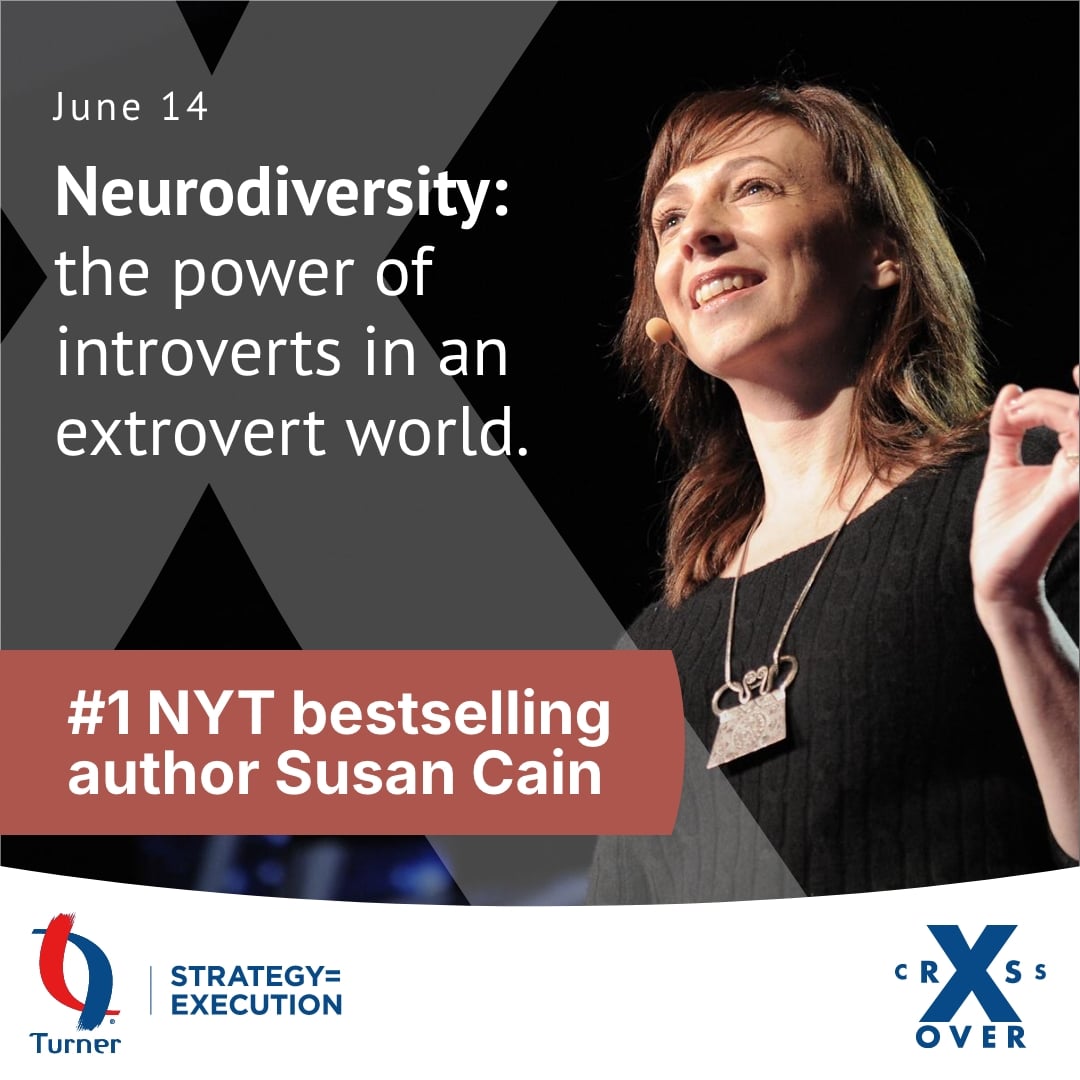
Turner X-Over on Neurodiversity: The Power of Introverts in an Extrovert World
For its clients, Turner organizes an exclusive X-Over series where leading speakers (scientists, thought leaders, top executives) share the latest insights from their fields. Strategy execution is a multidisciplinary field,

Seven Questions for Turner’s Healthcare Expert Annelies van der Ham
Healthcare logistics expert Annelies van der Ham has joined Turner’s healthcare practice. With a completed doctoral dissertation on the organization of healthcare logistics and years of consulting experience under her

