

1. What was the issue for which you engaged Turner, and why was it necessary? What made it complex or ‘wicked’?
 2. From strategy to execution
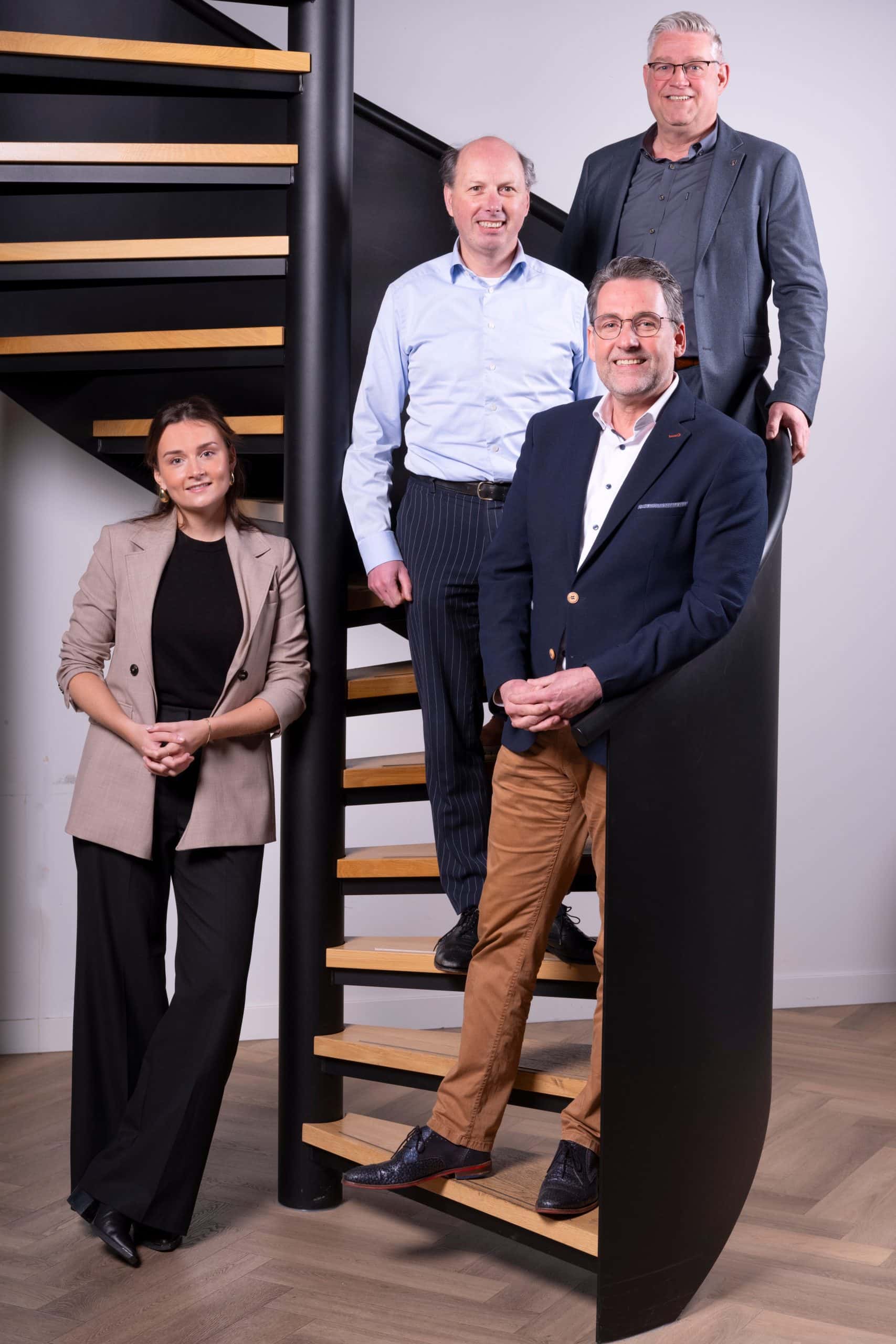
The assignment given to Frits Korthals Altes and Emma van Garderen of Turner was as follows: to help Stichting Salvage, in close collaboration with its partners, gain a clear understanding of what the future of its operations will look like. What are the bottlenecks, and where should the foundation take action? Above all, the task was to translate this vision of the future into a document that provides clear direction, with explicit and concrete themes and objectives that Stichting Salvage and its partners can actively work with.
It was by no means a straightforward assignment, as the foundation’s field of work is highly complex. More than 150 coordinators, including fifteen duty officers, an alarm centre staffed by employees specially trained by the foundation, hundreds of companies, the fire brigade, safety regions and other public authorities, insurers, and the affected parties themselves all form part of the ecosystem. “For us, it was important to have structural guidance,” explains Martin de Groot, Policy Adviser for Strategy and Development at Stichting Salvage. “If you are not careful, day-to-day operations take over and you end up doing little more than keeping the business running. By engaging Turner and working from one session to the next, we were able to develop the future vision in a structured way. That allowed us to keep taking the next step.”
For Turner, it was as enjoyable as it was interesting, says adviser Frits Korthals Altes. “Stichting Salvage is a unique player in the claims industry. Not everyone knows the foundation, but it fulfils a crucial role in insurers’ service delivery. You are inclined to think that everything will work out if you are insured. You take out a policy through an intermediary or online, but your points of contact are simply asleep on a Saturday night. It is then Stichting Salvage’s first responders who make good on the insurer’s promise. And all this from a foundation that, with a compact team and 150 coordinators, is able to provide 24/7 service, seven days a week.”
Emma van Garderen shares her colleague’s enthusiasm. “It was very special to be able to look behind the scenes and ask a wide range of experts in the sector how they view the future. How is it organised today, what should you take into account, what is going to change, and what can we do to ensure those changes are properly embedded in the system? We spoke to countless people and gathered as many different perspectives as possible in order to build a coherent and well-founded story.”
The leading question in Turner’s analysis was: what will 2030 look like for Stichting Salvage? It is clear, not least from the foundation’s record year, that Stichting Salvage is being called upon with increasing frequency. On the foundation’s advice, Korthals Altes and Van Garderen first entered into discussions with the organisation’s key partners: the loss-adjusting firms that provide the coordinators, and the major restoration companies, in other words the specialist cleaning companies. “In doing so, Frits and Emma gathered a broad range of perspectives, including political and legal, socio-cultural, ecological, economic, technological and demographic,” says Van den Berg. “We are facing quite a number of changes: the energy transition, urbanisation and a tight labour market, to name a few. By analysing all these developments carefully, they ultimately produced a document identifying the ten most important trends. On that basis, we entered into a second round of discussions, this time with our knowledge partners: the Dutch Association of Insurers, the insurers themselves, the Netherlands Institute for Public Safety, and the fire service’s knowledge and training institute. We asked those parties what they saw as the key impact of these trends and what Stichting Salvage’s role should be. As you can imagine, they also have their own views. With input from both sides — the operational stakeholders and the commissioning parties — we were able to form a clear picture. Based on that, we developed a strategy and identified the five main themes. As a result, we can now define very concrete actions and areas for improvement across these five domains: improving efficiency, increasing capacity, expanding the mandate, sharing knowledge, expertise and data, and finally strengthening our position. Preserving our 24/7 service provision was one of the issues. For example, we are increasingly dealing with two-income households, who are not always able to leave home at all hours, and the mentality in our country is changing as well. Availability at weekends and during the night is becoming increasingly difficult to secure. Family and friends also matter at weekends.”
Van den Berg and De Groot have found that the strategic plan is extremely robust. “Among all the parties with whom we have shared it, we are seeing genuine enthusiasm,” says Van den Berg. “They recognise the value of the plan and also see the benefits for themselves. Support for our actions is remarkably strong. It regularly happens that they ask whether they may use the document themselves. You also see that people are sometimes surprised that certain matters are still not in place, such as retrieving policy information. There is no central database for that, in the way the automotive sector has access to the RDW vehicle registration database.”
One of the main bottlenecks towards 2030 is the staffing challenge, as Van den Berg already touched on briefly. It is difficult to have enough people standing by, and the work itself is becoming more complex, Korthals Altes explains. “Think of the influence of social media. You are being filmed, you are being obstructed. And then there are operational issues as well: more and more city centres have bollards in place to regulate traffic. How do you get past them? And do you even have the right vehicle? Emergency responders simply want to do their job on site, but that is far less straightforward than it used to be.” Van Garderen adds: “That is something we also looked at: how can you remove those barriers for first responders?”
The execution phase was just as structured as the strategy development process, De Groot explains. “We incorporated the actions into a planning framework, which we are implementing rigorously. In effect, it is an OGSM: an overview of the objectives, goals, strategies and measures. We hold periodic policy review meetings in which we discuss the actions using the so-called action owner chart: who is responsible, and what is the status? That enables us to track developments very closely. Because we have built up the annual calendar gradually and thoughtfully, it remains manageable.”
 3. The breakthrough?
According to Van den Berg, the ten trends and five core themes formulated by Turner proved to be the breakthrough in this process. “I experienced the collaboration with Frits and Emma as particularly enjoyable,” he says. “Even during our first meeting, they asked probing questions that sharpened our understanding of ourselves. They translated that view into a clear structure and distilled the essence from it. We still had a tendency to elaborate too much, but they compelled us to become very concrete. That helped us enormously, also in discussions with our partners. After all, the way they view us matters. Turner handled that very well and with great professionalism.”
That process was by no means always easy, he continues. “Insurers, cleaning companies, loss-adjusting firms: they are, after all, competitors. Everyone wants those assignments. So it was truly impressive that they managed to bring those parties together around the table to look jointly at the future.”
Drawing up a strategy is a discipline in its own right, adds Frits Korthals Altes, and it requires a number of steps. “But you never know exactly in advance what the outcome will be. We always say: trust the process — if you follow these steps, it will work out. But when you organise a working session like that and invite a range of different parties, it is essential that those parties feel safe enough to speak openly and candidly. I think Johan van den Berg sensed that well when selecting the discussion partners. Together, we created a setting in which people were willing to share their ideas. That was hugely important in this process.”
Martin de Groot identifies a number of steps that were critical to the success of the project: “Gathering input from the partner companies, the regular meetings to safeguard progress, the careful preparation, the serious and accountable attention given to the process, and the rapid follow-up, enabling Turner to get to work in a concrete way. The tight process facilitation worked extremely well.”
 4. Key dilemma
According to Johan van den Berg, the key dilemma was how Stichting Salvage, as an independent organisation, should manage its dependence on its commissioning parties. “For us, the question was how to maintain that connection. How do we ensure that we remain relevant in the future and continue to meet the expectations of the insurance industry? Making that explicit and ensuring that we also reached alignment on it — that was a real dilemma.”
The market in which Stichting Salvage operates is changing. “Claims handling is taking place in a different way from before; smaller claims are sometimes settled directly. AI can help insurers organise the chain differently. Where is that heading? We needed to make that visible and understandable. I believe we succeeded in doing that in a good way. We have now existed for almost forty years, and a great deal has changed and become more professional. But three things have always remained the same: the attention, the action, the advice. We make sure there is always someone on site. And despite all the digitalisation, that still proves to be the most highly valued factor. That is why those affected rate us so highly. People say: I was standing outside at night in my pyjamas, and there was someone there who, within half an hour, helped me get back on track and was able to provide calm and reassurance. That is Stichting Salvage’s strength, and that will not change over the next forty years, provided we continue to do it well.”
 5. Results?
The principal benefits accrue to Stichting Salvage itself, which now has a sharply defined view of the direction its operations are taking towards 2030. In reality, however, the entire chain benefits from this exploration. “You can see that everyone is doing something with it,” says Van den Berg. “This process has had a broader impact. For our partners, it did not stop at providing input and attending a session. On the contrary, they themselves also derived considerable value from it. It opens doors that I had not expected to open. And that is extremely valuable to us. This project was intended to define our own strategy, but we have also been able to add value for the parties we asked to support us.”
And it does not stop there, De Groot adds. “Next month, we will be holding another lunch session with a number of the discussion partners, during which we will share the outcomes once again. They already have the document, but it is important to continue seeking connection and to keep exchanging views. After all, we also need our partners for the actions we are taking.” Ultimately, of course, it is also those affected who benefit: thanks to this process, a well-functioning Stichting Salvage will be able to carry out its often highly valued activities in a better and more efficient manner.
Would you like to improve, innovate, and transform faster?



Klimmendaal
At the initiative of Verstegen Accountants in Dordrecht, Edwin Schippers of Turner conducted an organizational assessment of Klimmendaal, a rehabilitation center headquartered in Arnhem. The organization was facing several challenges:

Sustainable Improvement in Academic Success
High dropout rates and low completion rates. Utrecht University of Applied Sciences therefore sought to improve academic success in a comprehensive and systematic manner.

Aegon
Business Property Damage Transition Aegon Netherlands Clear Vision Driven by core values New criteria as the deciding factor From Vision to Execution Insurer Aegon has

NHL and Stenden
Collaboration Model and Transition Path for a Merger NHL and Stenden Shared Ambitions and Opportunities Coordination of the Entire Program Higher-quality education and research NHL

HAS University of Applied Sciences
Accelerated Implementation of the Educational Vision Flexible and Adaptive Education Made a Reality A Concrete Vision for Educational Reform Insights into the Progress of Educational Reform Self-Assessment for Faculty and

Noorderpoort
Digital Innovation in the Classroom ROC Noorderpoort Experimentation in Education Innovation in Attendance Tracking Saving Class Time Digital Innovation is high on the agendas of

Breakthrough in Primary Care
Spreekuur.nl is a great example of how digital healthcare makes it possible to provide the Right Care in the Right Place. With this triage and diagnosis app, patients can take

Digidok
Breakthrough in Primary Care DigiDok Results Treat 32% more patients per hour A virtual consultation can be 36–50% shorter than an in-person consultation 80% of

The Hague University of Applied Sciences
Faster assistance for students Clear responsibilities for teaching and education support staff A practical improvement plan for a critical process: testing and examinations. Accelerating progress on challenging issues: fraud detection

College of Woodworking and Furniture Design
Improved ordering process for students and faculty Smarter procurement of materials More even workload for “stores” (fewer peak periods) More efficient administration and better control over finances Foundation for continuous

Noorderpoort
A new direction for Noorderpoort that aligns with society in 2035. Strategy Execution: immediately testing the strategy in practice through experiments. Close alignment with the needs of students and the

Netherlands Food and Consumer Product Safety Authority
Innovation in Oversight and Enforcement Netherlands Food and Consumer Product Safety Authority (NVWA) Breaking Down Large-Scale and Complex Implementations Establishing an Implementation and Innovation Engine