More relevant than ever: time to focus on Education portfolio management

Vocational and higher vocational education institutions face major challenges: declining enrollment, budget cuts, and a changing job market. A strategic approach is needed to continue offering relevant education. Turner introduces Profolio, a tool that helps educational institutions make comprehensive decisions about their program portfolio.

Turner provides its clients with timely, fresh, and relevant insights into their markets and the Strategy Execution challenges they face. In this article, Tjalle Hoekstra and Jasper Engelbert, both senior managers in the Education sector, discuss the impact of portfolio management and its implications for Strategy Execution.

Strategic Portfolio Management as the Key to Future-Proof Education


Vocational and higher education are under pressure. Demographic decline, falling enrollment, budget cuts from The Hague, and a changing society and labor market. This is forcing institutions to further develop their program portfolios to continue offering affordable and relevant education to their regions. This requires a clear understanding of where your programs stand and how they relate to developments in their environment and the institution’s mission. And so, it’s time to get to work: the program portfolios of vocational (MBO), higher professional education (HBO), and university institutions will require major overhauls in the coming years to continue serving as the engine of society and the economy in a sustainable manner. Maintaining a program portfolio is a strategic process, driven by insights that enable well-founded, comprehensive decisions about launching, Continuous Development, and phasing out programs. To assist with this, Turner is introducing a new product: Profolio. Profolio is a tool that provides a comprehensive view of the performance and relevance of an institution’s program portfolio and offers actionable insights for sustainable development. This creates an objective starting point for a constructive, results-oriented portfolio dialogue. Tjalle Hoekstra and Jasper Engelbert share their experiences with portfolio management within educational institutions and explain the concept.


Now more than ever, institutions need to get to work on their Portfolios

Vocational education (MBO) and higher professional education (HBO) face a number of interesting challenges. Most of the country is experiencing a decline in student enrollment. Under the current funding system, this puts even greater pressure on the affordability of relatively small programs. High dropout rates and a large number of students taking longer than expected to graduate also create financial challenges. Recent budget cuts are adding to these challenges. In addition, the labor market is changing as a result of various transitions. There are several causes for this: technological developments and climate issues, but an aging population also influences the competencies and skills required in the labor market. New professions are emerging, and the demand for workers in certain sectors is growing, while it is declining in others.

Lifelong Development (LLO) is one of the responses to this trend: keeping working professionals up to date and providing them with training, continuing education, and reskilling. But those entering the workforce in the coming years will also need different skills than they do now or than they did five years ago. These challenges are, of course, not new; educational programs and institutions have been working since time immemorial to improve quality, implement Continuous Development of curricula, and enhance the efficiency of processes.

However, the coming period also calls for a different approach, as current circumstances appear to be a “perfect storm.” For our institution to weather this “storm,” we must also take a more strategic look at our Portfolio of academic programs. Consider which programs should be launched, redesigned and subject to Continuous Development, restructured, merged, exchanged with colleagues, or reconsidered and phased out. We call the systematic approach to this “portfolio management.” But where do you start, and how do you set it up?

Organic growth and ad hoc decision-making

“Actually, we need to take a step back to answer that question,” says Tjalle Hoekstra, a consultant at Turner. Hoekstra and his colleague Jasper Engelbert, who have both been helping educational institutions set up portfolio management systems for years, are regularly asked by these institutions to provide advice on these types of issues. “Educational institutions have often grown organically,” says Tjalle. “Which programs are offered is often a matter of tradition, resulting from numerous mergers or, in the past, influenced by the region where the institution was located. And experience shows that in recent years, there has been a significant increase in the number of programs, program formats, and cross-disciplinary offerings. That was possible, too, during times of relative financial flexibility.”

The result of this past relative stability is that many institutions have not developed a proper process or decision-making framework for evaluating the various degree programs that are offered or launched, Tjalle continues. “When significant changes were implemented, or a new program was added—for example, in engineering or Healthcare—there was usually an expert in the field who took the lead. That worked fine, because without exception, these are passionate, knowledgeable, and enthusiastic people. But there has rarely been a sustainable and strategic process in place. Many institutions are reactive. Moreover, they often depend on these enthusiastic individuals. Periodic, comprehensive evaluation is actually rarely on the agenda.”

Time to Go Professional

Many institutions are beginning to realize that professionalizing portfolio management is necessary. This is a prerequisite for looking ahead and being able to quickly anticipate changes, both internal and external. It allows you to continuously monitor how your entire Portfolio and the how different programs within that field are performing, and how the needs of (future) students and the job market are changing. Such a This process not only helps educational institutions identify the need for new programs, but also assess existing ones and plan for the future. “Institutions without sustainable portfolio management often react too ad hoc,” says Jasper. “They only take action when students stop enrolling or the program is already operating at a loss. Or they only spring into action when that aforementioned enthusiastic maverick comes up with an idea for a new program. However, that’s a risky strategy. Institutions should take responsibility for looking beyond the immediate future, because by relying solely on the individuals you already have on staff, you don’t know what you don’t know.”

With sustainable, periodic portfolio management, you can anticipate developments sooner. Jasper: “If you set that up properly, you can already start shaping to

“what the region will need in ten years. And there’s a good reason for that: it takes a few years for a degree program to be fully developed and for its first students to enroll, and then it takes another 5 or 6 years before they are making a meaningful impact in the job market.”

A close look at labor market trends and the demographics of the market in and around a specific region also helps educational institutions make decisions about adjusting existing programs and structuring Lifelong Learning. “We no longer need to make a case for Lifelong Learning; in the Netherlands, we’ve now recognized that it’s important,” says Tjalle. “That does mean, however, that we must constantly monitor where labor market shortages are likely to arise, where the volume of work is actually declining, and what knowledge and skills people want and need to develop for the labor market—especially in light of the transitions we are part of and helping to shape.”

Our job is to help our clients tackle difficult and complex issues and bring solutions to fruition.

Portfolio Management as a Strategic Process

These are the kinds of issues Tjalle and Jasper have frequently been called upon to address in recent years. “We’re mainly asked to help develop a methodology,” says Jasper. “Educational institutions want to address these issues on their own, but need support with implementation: how do you set up a structured and sustainable process, and how do you achieve results? We really see this as an organizational development issue: it requires developing people’s skills, a sense of urgency, Ownership, behavior, processes, and systems.” Tjalle: “Institutions come to us when things start to go wrong. They notice that student enrollment is declining and funding is shrinking. Then the question becomes how they—as an entire educational institution—should discuss which issues at what point in order to arrive at a better Portfolio.”

The first step is to determine what you want to achieve with your programs: your portfolio strategy. How you want to serve different regions based on your profile, which labor markets you want to train for, and which transitions you want to support. And which current issues (internal) and trends (external) call for Portfolio interventions.

“Next, it’s about asking the right questions, generating the insights needed to answer those questions, and finally, making decisions that can be implemented. That is, in fact, what the portfolio management process entails.”

“These are often thought-provoking conversations,” Tjalle says. “A degree program usually consists of a team of people who are fully committed to doing a good job for the students. And yet, reality can catch up with you, and an institution must make choices to ensure its future viability.”

What stood out in the projects that Tjalle and Jasper have carried out in recent years is that discussions within institutions about the Portfolio are fragmented and often based on gut feelings. Insights into the Portfolio’s performance and relevance are not fully harnessed to support the monitoring and improvement of the Portfolio. Tjalle: “Insights into business performance are, for example, collected at the level of organizational units (such as teams, faculties, or colleges), and insights into labor market trends are gathered at the level of industries or sectors. Both are highly relevant for the future, but they do not help in drawing conclusions about individual degree programs.” Another problem is that every program within an institution is unique, so comparisons are difficult. Yet there are often comparable programs elsewhere in the Netherlands. Understanding the performance of those programs can help in understanding the performance of your own programs.

By structuring the fragmented information landscape, presenting it in a comprehensive way, and summarizing it, you’ll have a much stronger starting point for a dialogue about the future of your education portfolio.

Turner Introduces Profolio

Creating an information product like this is no small feat, as Tjalle and Jasper have learned over the past few years. That’s why they’re now launching Profolio: a tool that provides all vocational, higher vocational, and university institutions in the Netherlands with an at-a-glance overview of the overall performance and relevance of their program portfolios, in comparison to those of peer institutions. Furthermore, it offers the opportunity to delve deeper into specific issues and provides actionable insights. Based on 25 public sources, in a dynamic Power BI dashboard.

Tjalle: “We noticed that in all the projects we worked on, the key questions about the Portfolio ultimately boiled down to the same thing. So it’s a shame if every institution invests a lot of time and money into independently developing, managing, and updating a content model, data model, and dashboard.” Jasper continues: “And aside from this economic consideration, we’ve found that our model helps. Based on the insights from Profolio, we see that clients can pinpoint in 15 minutes exactly where and what action is needed in their Portfolio. That’s truly a BREAKTHROUGH that can help institutions remain responsive in these turbulent times. Of course, that’s not the end of the story, because the context of every program is unique, and there are many options for addressing challenges. But such an objective starting point creates a shared sense of urgency and gives Portfolio development a flying start.”

Profolio will be rolled out further in the coming period. If you’d like to learn more about Turner’s vision for portfolio management, our services, Profolio, or a product demo, please contact Tjalle or Jasper.

"*" indicates required fields


Would you like to improve, innovate, and transform faster?

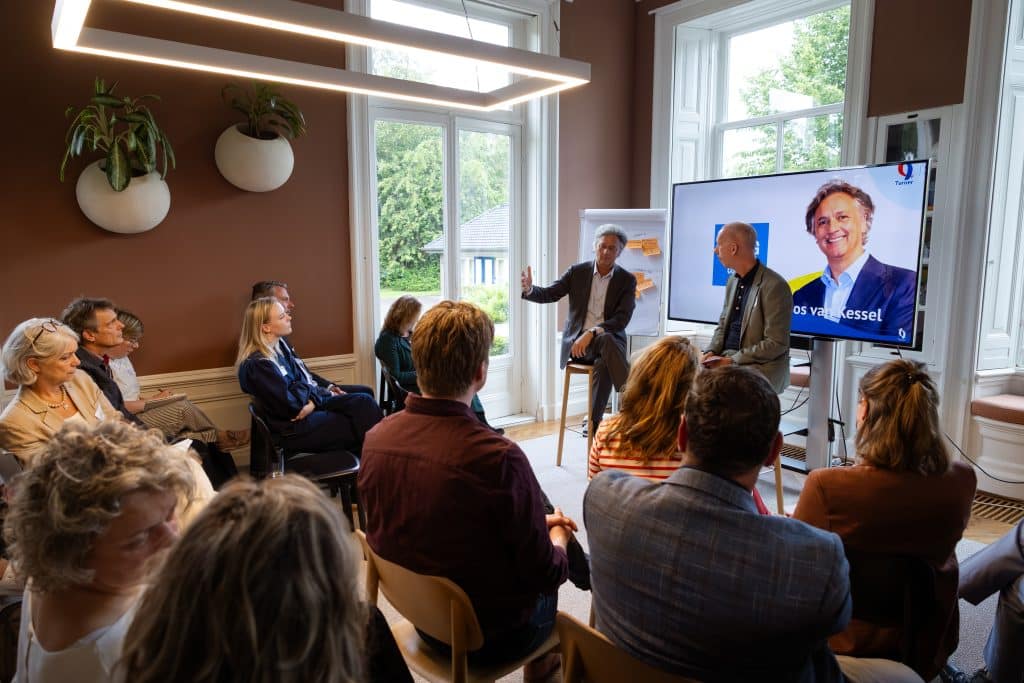
Turner is specialized in strategy execution. We make it our business to turn an organisations strategy into reality. For the seventh consecutive year, Turner has been recognized by clients as the best strategic consulting firm in the Netherlands. More than 4,000 executives and professionals participated in the MT1000 survey, in which Turner received the highest ratings for strategic consulting, client focus, excellent execution, and product leadership.

MT1000 EN Series

Read more about the results other clients achieved with the support of Turner Strategy = Execution. Ready to talk? Schedule an appointment. Contact us.

All of our specialists' insights on Education

notebook hand
Digital & Commercial excellence
Alexander Bruinsma

NHL and Stenden

Collaboration Model and Transition Path for a Merger NHL and Stenden Shared Ambitions and Opportunities Coordination of the Entire Program Higher-quality education and research NHL

Read morer »

Explore more of our work

notebook hand
Digital & Commercial excellence
Alexander Bruinsma

NHL and Stenden

Collaboration Model and Transition Path for a Merger NHL and Stenden Shared Ambitions and Opportunities Coordination of the Entire Program Higher-quality education and research NHL

Read morer »
Education
Alexander Bruinsma

HAS University of Applied Sciences

Accelerated Implementation of the Educational Vision Flexible and Adaptive Education Made a Reality A Concrete Vision for Educational Reform Insights into the Progress of Educational Reform Self-Assessment for Faculty and

Read morer »
Education
Alexander Bruinsma

Noorderpoort

Digital Innovation in the Classroom ROC Noorderpoort Experimentation in Education Innovation in Attendance Tracking Saving Class Time Digital Innovation is high on the agendas of

Read morer »
Education
Alexander Bruinsma

The Hague University of Applied Sciences

Faster assistance for students Clear responsibilities for teaching and education support staff A practical improvement plan for a critical process: testing and examinations. Accelerating progress on challenging issues: fraud detection

Read morer »
Education
Alexander Bruinsma

Noorderpoort

A new direction for Noorderpoort that aligns with society in 2035. Strategy Execution: immediately testing the strategy in practice through experiments. Close alignment with the needs of students and the

Read morer »
Education
Alexander Bruinsma

Radboud Academy

The successful application for the LLO Catalyst from the National Growth Fund stems from the partnership between Radboud University, Maastricht University, and the Open University to collaborate on Lifelong Development.

Read morer »
Education
Alexander Bruinsma

Landstede MBO

“Lifelong Development is now firmly established.” Landstede(tag) has fully integrated Lifelong Development (LLO) into its vocational education (MBO) programs. With a clearer vision, collective ownership, and a strong Execution Coalition,

Read morer »
Education
Alexander Bruinsma

ROCvA-F

How do you drive progress in digitalisation within a decentralised education organisation? At ROCvA-F, a smart approach involving a ‘0.7 version’ led to greater clarity, support and acceleration.
Read morer »
Education
Alexander Bruinsma

INNOVO

The development of INNOVO’s new course plan in South and Central Limburg was an unconventional exercise. Due to previous circumstances, the 43 affiliated schools had only recently developed their own

Read morer »

Contact​

We would like to get to know you.
Do not hesitate to contact us if you have any questions!

Huize de Boom
Arnhemseweg 107
3832 GK Leusden

Phone: +31 (0)33 – 285 93 00
Email: info@turner.nl

Make an appointment

Would you like more information or a tailor-made quote? Fill in the form for a no-obligation appointment.