Strategy = Execution
Your strategy needs a strategy
The classic approach of slowly and ploddingly devising a strategy, analyzing market developments, restructuring the organization and preparing for implementation doesn’t work anymore. It just takes far too long. Effectiveness and agility are far more important than perfection.
Gone are the good old days when it was good enough to analyze the market, look at the company’s strengths and weakness, pinpoint the competitive advantages and draft and endlessly redraft a plan. Life used to be so straightforward. But in the New Normal, in this digital age with its fierce competition, this way of working has lost its relevance. You can’t afford to wait for things to crystallize. If you do, the competition will beat you by a mile.
Higher purpose
Modern strategy execution in the New Normal requires a fundamentally different way of working. Nowadays, the equation that works is Strategy = Execution. This doesn’t mean strategy has become irrelevant. But every strategy requires another strategy: an execution strategy. In a column in the Dutch business paper Het Financieele Dagblad, INSEAD professor Annet Aris wrote, “A classic strategy analyzes market developments, looks at a company’s strengths and weaknesses, pinpoints the competitive advantages that can be exploited and based on these steps, devises plans as to where and how that company can grow. The result is a series of very precisely calculated projections for the next 3 to 5 years. More and more academics and even consultants and digital businesses are tossing this classic approach out. They are replacing strategy with a systematic quest for a higher goal, with lots of trial and error and unexpected outcomes, just like Columbus’s sailing expedition to Asia.”
Small can be big
In the new normal, organizations need a solid, but brief strategy executed in short cycles of tight work packages comprising analysis, design, execution and business cases. In other words, small can be big. What does this mean? It means cutting large ambitions or goals up into smaller chunks, which allow you to learn as much as possible as fast as possible. This method is appropriate not only for small incremental changes, but also, and in fact particularly, for renewal and radical innovation. Organizations must make very deliberate choices and balance their strategic goals and execution capacity. And based on this, they need to pare down their portfolio of initiatives (projects, programs, training courses) every year. For more on this topic, see my earlier blog post Purge, select and balance.
Lazy goals
You can’t do without a clear vision, a sharply defined why, and ditto strategy. I regard the setting of vague long-term goals as sheer laziness. And while rigid blueprints may have lost their relevance, planning remains key. Leadership development expert Harry Starren calls this the planning paradox: you need to plan and look ahead, but also be prepared to change tack at the drop of a hat. It’s all about balance. Lucid corporate visions and strategies are still rare, but more and more companies are working on developing a coherent mission and a concrete, inspirational long-term vision and strategy. Which is an entirely different kettle of fish than a vague long-term goal.
Punch above your weight
Strategy expert Richard Rumelt hits the nail on the head in Good Strategy/Bad Strategy when he writes that many organizations have no strategy, even if they think they do. What they call strategy is often no more than a (long) list of performance indicators, or worse yet, a vague wish list. Strategy means tackling challenges head on. The essence of a good strategy is that it outlines the challenge and provides a roadmap, which form the basis for a concrete, coherent action plan. If this sounds rather obvious, be aware that few companies and institutions actually have such strategies. Thinkers like Jim Collins and Hans van der Loo have shown repeatedly that profitability depends on a clear vision. A well-defined vision is what enables a company to punch above its weight. Organizations with a robust and widely supported vision are over 25% more profitable than organizations that lack one.
It is easy to see why strategy execution has fundamentally changed. Figure 1 below shows why modern strategy execution and change management thrive on effectiveness and agility rather than perfectionism.
Agility
Effectiveness is just one of the pillars of successful strategy execution. Agility is the other. I know, it’s a bit of a hype. But it truly is an important concept in modern strategy execution. Cornell University professors Lee Dyer and Richard A. Shafer offer a clear definition of agility: “Organizational agility is the capacity to be infinitely adaptable without having to change.”
Agile organizations have a built-in capacity to shift, flex, and adjust to changing conditions. There is a correlation between agility and profitable growth. Research at the Massachusetts Institute of Technology (MIT) shows that agile companies grow revenue 37% faster and generate 30% higher profits than non-agile companies. The Economist Intelligence Unit (EIU) has reported that 90% of leaders interviewed regard strategic agility as critical to their organization’s success. You should realize, however, that there is a difference between a capacity to be agile and actually being agile. It is essential to take a helicopter view at the monthly boardroom meeting, so you can rise above the fray and see where agility is needed.
In my blog about the first building block of the Strategy = Execution Model AMBITION, I will explain how to use these principles to create a strategy that’s fit for the digital age.
Strategy = Execution. Improve, Renew and Innovate Faster
How can organizations make strategy execution their number one priority? And improve, renew and innovate faster? This I describe in my book Strategy = Execution. Strategy = execution is based on the research that Turner started years ago into the success factors of strategy execution and innovation. We interviewed 60 directors and professionals and analyzed more than 75 cases, 300 relevant books and articles.
- More about Jacques Pijl (author) and Turner Consultancy.
- The most popular interventions based on Strategy = Execution
- 24 endorsements from organizational leaders
- American management book of the year 2021, no. 1 in the category of strategic management, in the top 100 bestseller, seventh edition, translated into: English, German, Spanish, Russian and Bahasa.
- Selection of the most important management books according to CEOs of innovative organizations (FD New Champions). Included in library of classics (mb.nl).
- Nominated for Management Book of the Year.
- Countless articles and interviews in FD, Emerce, Frankwatching and CFO.
- Numerous Ted Talks and in-company workshops at the top 25-50 organizations, average rating 8.7.
Make an appointment
Would you like to improve, innovate, and transform faster?
Turner is specialized in strategy execution. We make it our business to turn an organisations strategy into reality. For the seventh consecutive year, Turner has been recognized by clients as the best strategic consulting firm in the Netherlands. More than 4,000 executives and professionals participated in the MT1000 survey, in which Turner received the highest ratings for strategic consulting, client focus, excellent execution, and product leadership.

Read more about the results other clients achieved with the support of Turner Strategy = Execution. Ready to talk? Schedule an appointment. Contact us.
A selection of our assignments
Curious about more results from our clients? View the full selection here.

ICT service provider | Acquisition
ICT service provider Acquisition Context: ICT service provider intends to acquire its largest competitor Challenge: Ensuring that the business case will actually be accomplished (acquisition

Occupational health service achieves a healthy balance between professionalism and engagement
Breakthrough: The professionals at the occupational health service, particularly occupational physicians, assist workers in achieving optimal performance throughout their careers. This requires a healthy business operation.

Prepared for the future of post-trade
Prepared for the future of post-trade. “Profound knowledge of scenario analysis, and with knowledge of the ecosystem.” – Henk Brink, chairman of DACSI

Fast-growing tech company providing cloud services
Executable growth strategy and conditions for execution

Food company. Team and plan in one go, with significant depth
Breakthrough: At the food company involved, the Top-70 was activated with this building block. Going through tough times together forges a special bond.

BS&F
The Municipal Insurance is of exceptional societal relevance: this insurance prevents healthcare avoidance among vulnerable residents and thus contributes to preventing additional societal costs. BS&F enlisted Turner to further digitize
A selection of our insights
Curious about more of our insights? View the full selection here.

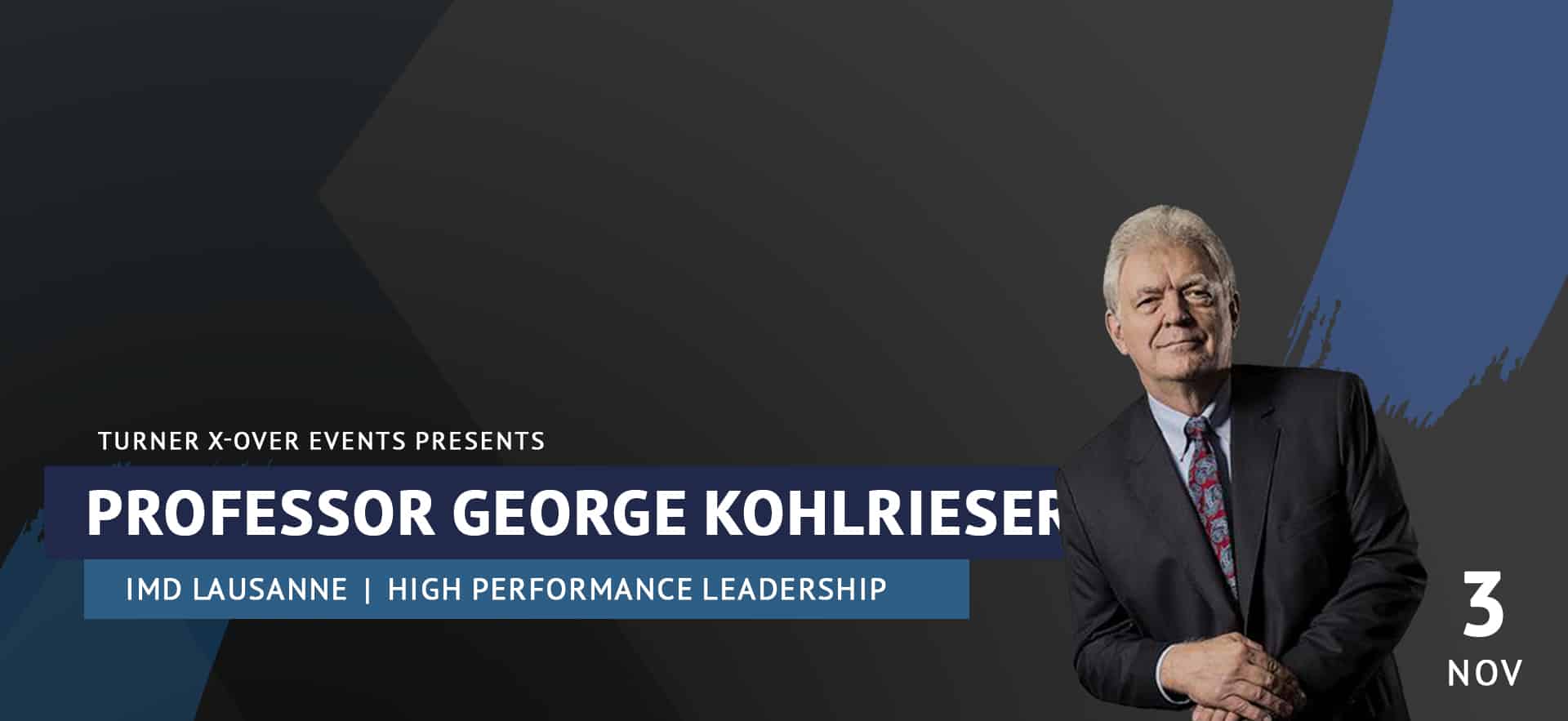
Professor George Kohlrieser Live on High-Performance Leadership
Professor George Kohlrieser (IMD Lausanne) delivered the LIVE seminar, “High Performance Leadership,” exclusively for a select group of Turner associates.

Scalable AI Solutions for Education
Jeroen Visscher of Turner has joined the Dutch AI Coalition as the leader of the Education working group. Recently, he has brought together a team of stakeholders from education, research,

Gymnasts donate to the Estrela da Favela education project
Turner provides financial and organizational support to the Brazilian educational project Estrela da Favela. This support is especially needed this year. Many Turner employees therefore decided to make an extra

Benefits Management: What’s the Payoff?
Too often, organisations lose sight of the intended benefits once execution begins. This results in disappointing outcomes and missed opportunities. How can you avoid this? Effective benefits management ensures that
Colleges: Where Is the Real Innovation?
Education Colleges: Where Is the Real Innovation? Turner conducted a study on educational innovation among 25 deans and administrators at 14 colleges. Colleges: Where Is

The Impact of the New AI Legislation (AI Act) on the Financial Services Sector
The recent agreement between the European Parliament and the Council on the European Commission’s amended proposal for an AI regulation marks a significant step forward in the regulation of artificial